
It’s a clear and still winter’s day at Mandalay House and Garden. The only sounds are the chirping of birds and the distant hum of a hedge trimmer tackling the garden’s vast expanse of immaculate hedge walls that tower metres above romantic garden paths.
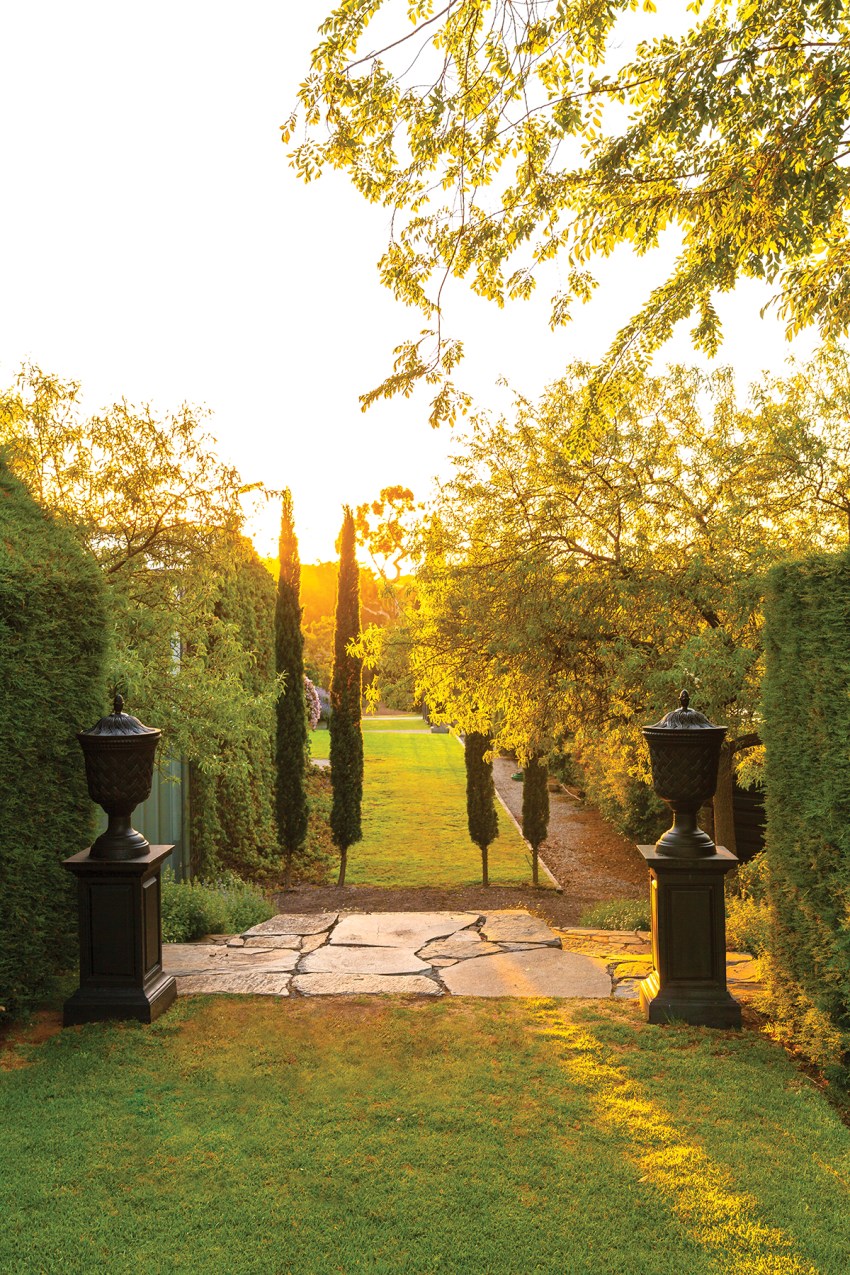
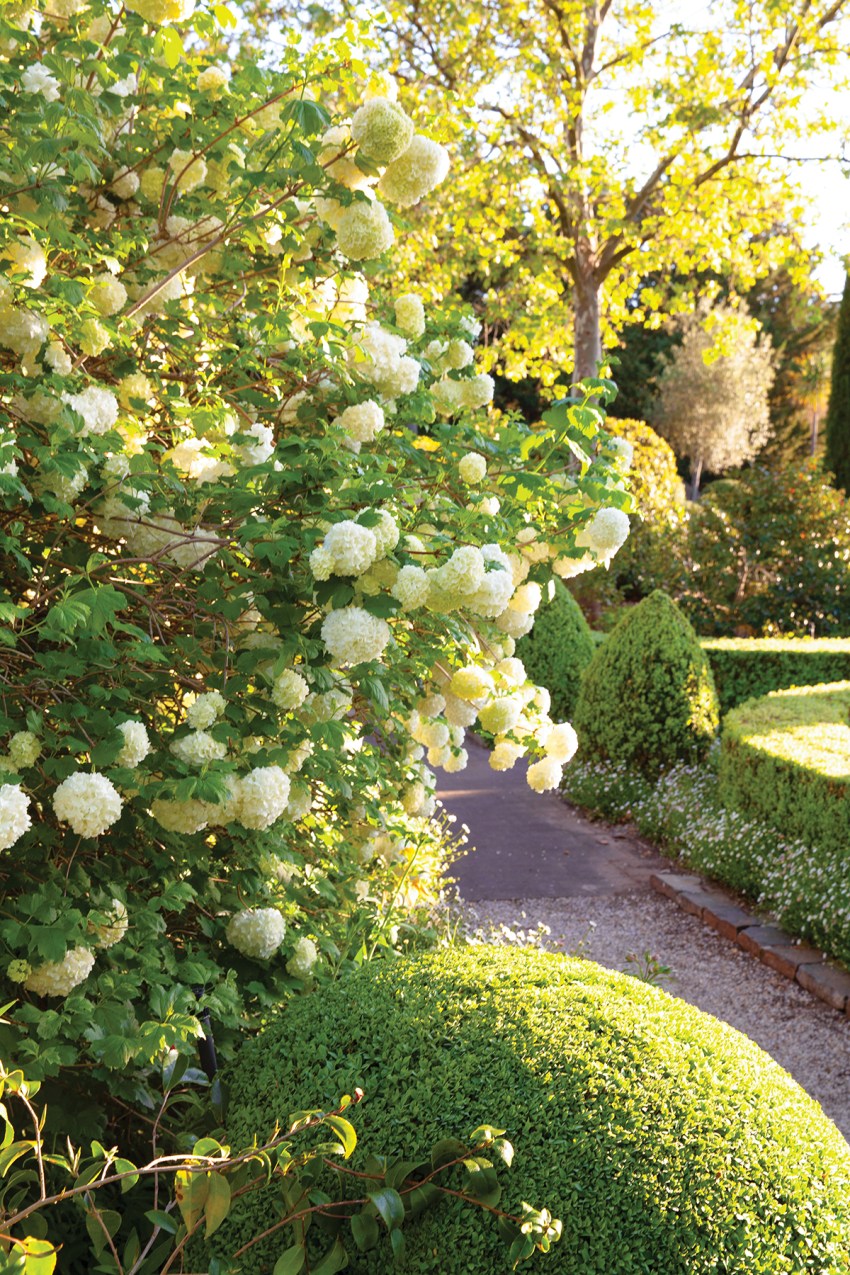
Between the neat rows of mature pencil pines, plane trees and weeping mulberries, expansive garden corridors stretch out for hundreds of metres. These arrow-straight paths tunnel through the hedges and formal garden rooms to create long vistas, punctuated by urns and statues at their completion.
Deborah Schultz is the owner and creator of this formal Italian-inspired garden, nestled in a valley on her undulating 200-hectare property. Located in the hills behind Mount Barker, Mandalay has been Deb’s focus for the past 26 years and is now a popular wedding venue.
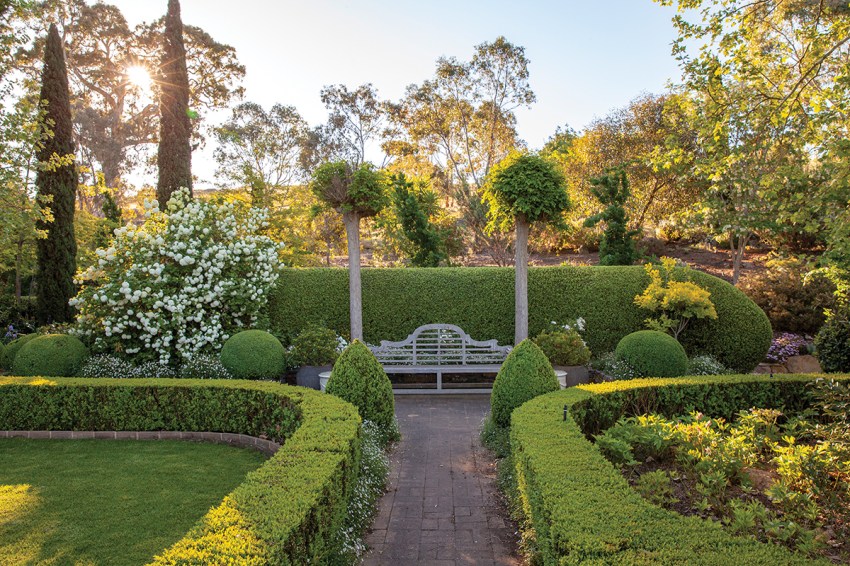
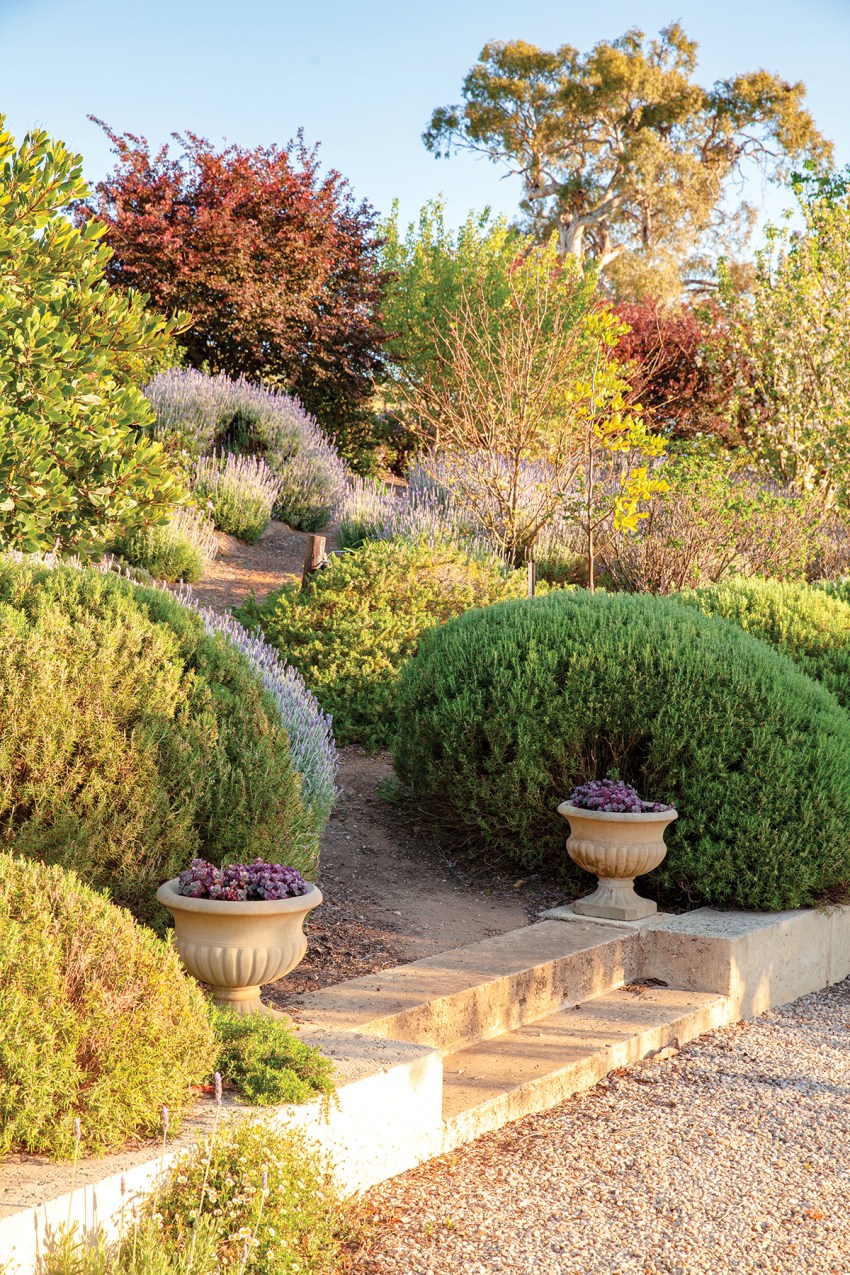
It’s up an embankment flanking the garden’s eastern side that Deb has led SALIFE to show off her favourite part of the garden – an informal Mediterranean area with rambling paths and plantings that form an unstructured departure from the otherwise ruler-perfect arrangement.
“I love coming up here,” Deb says. “To me, this is the satisfying and creative part of the garden. It’s like something you’d find in the hills behind Florence. Sometimes during a wedding, I’ll just sneak up here and wander through the garden and look down at everyone dressed up and mingling with their friends, drinking Champagne.”
From this vantage point looking over the established garden it’s almost impossible to imagine exactly what faced Deb and her late husband Barry Schultz when they purchased the property in 1996.
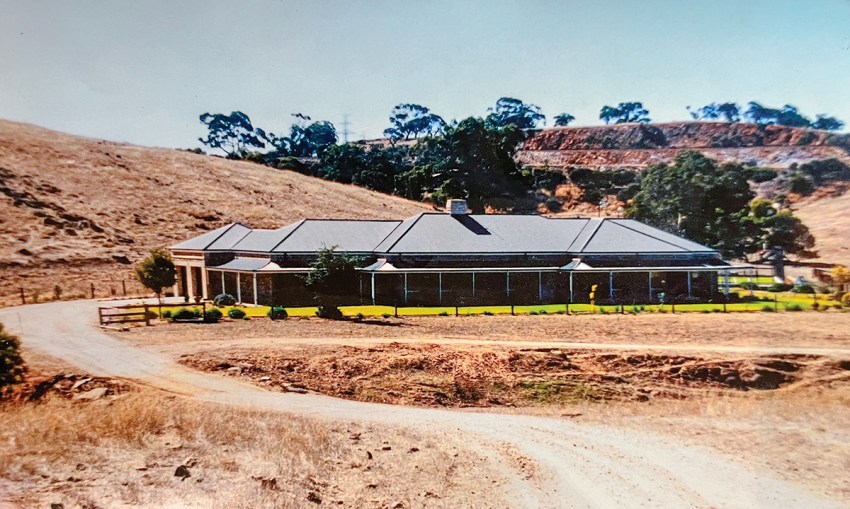
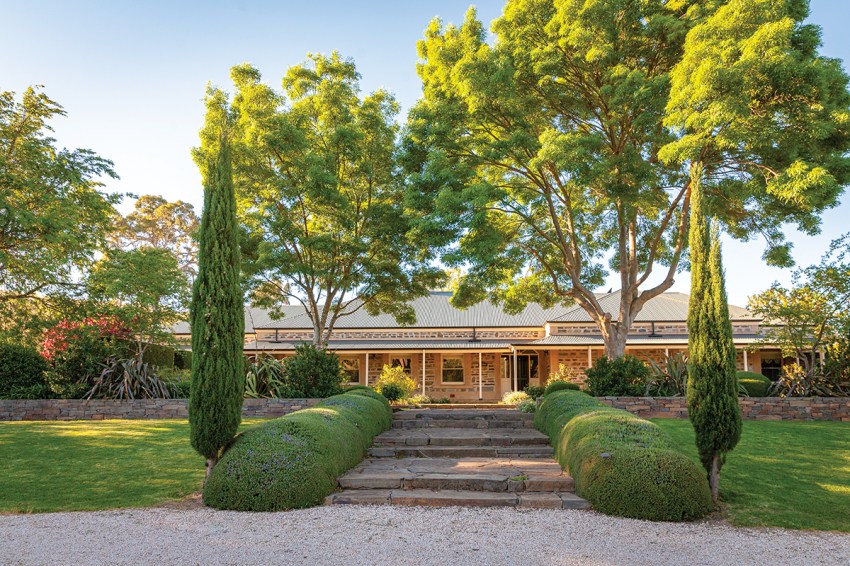
Deb’s photo albums show that the property was indeed “a big sand pit”. The previous owners had built the beautiful home in the late ’80s but hadn’t reached the stage of planting a garden. Deb and Barry, who moved to Mandalay from Port Lincoln, inherited what was a base for a tennis court and an expanse of dusty, dry farmland.
As Deb’s long-time gardener Graham Coglan continues to work away taming hedges in the distance, Deb explains how she and Barry – neither of whom had been particularly good gardeners – had to learn from scratch. In some ways their naivety protected them from knowing the full scale of the challenge that lay ahead.


To Deb’s dismay, the property’s surrounding paddocks were also void of trees which had been felled to make railway sleepers. Enormous red gum stumps give a sad clue to what the landscape would have looked like pre-settlement.

“It was awful – just a gravel carpark next to the house, surrounded by a bare, dry and dusty paddock. It was high summer when we moved in, so it was extremely hot and dry,” says Deb.
Water was the problem. There was only one viable dam on the property, and it was unusable. “Spring water; it sounds so nice. I thought it meant potable water. But the water coming out of the ground into the dam was salty at 5000 parts per million. You certainly couldn’t grow camellias and hydrangeas with that,” she says.
With his background in chemistry and being of an “extremely tenacious” nature, Barry devised a plan to install a desalinator unit. It was a laborious process that took two years, but the desalinator is the only reason the garden exists today.
A successful businessman who ran a chain of pharmacies, Barry was enamoured with the idea of becoming a farmer, swapping his suit for farm clothes and driving a tractor. “Barry loved the idea of all the space and the privacy. He was expansive with his ideas of what we could do and became as hooked and as passionate about it as I did. It was quite addictive,” says Deb.
Deb wasn’t completely invested in the project until a trip to Italy where the couple visited many neo-classic Roman-style gardens. Deb saw what could be done in a similar climate – and with limited water – and was inspired by the romance of it all.
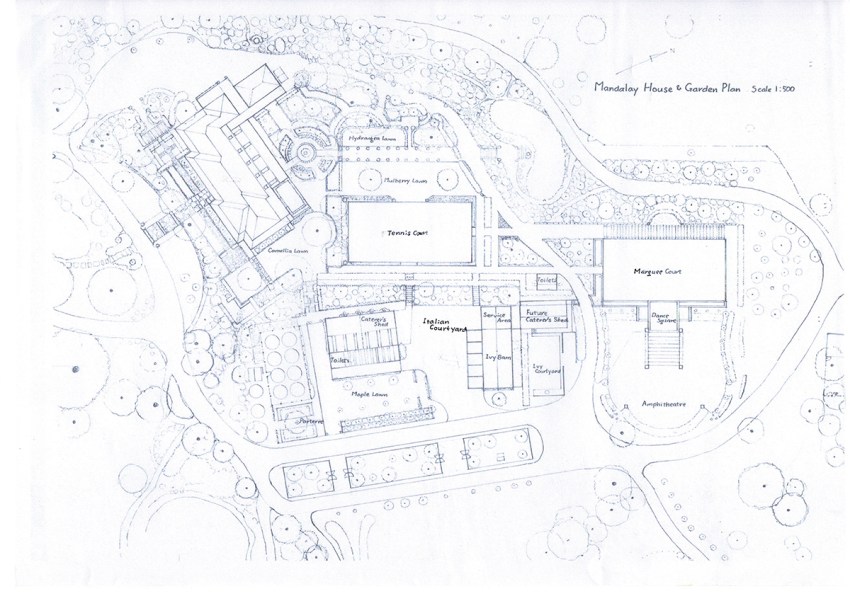
The lynchpin to the entire garden is the water fountain near Deb’s back door. The circular shape allowed Deb to design garden paths like spokes from a wheel radiating out from the fountain. “Once that was sorted, I was off and away. It meant all the vistas became obvious – you just divide it up and keep going outwards,” she says.
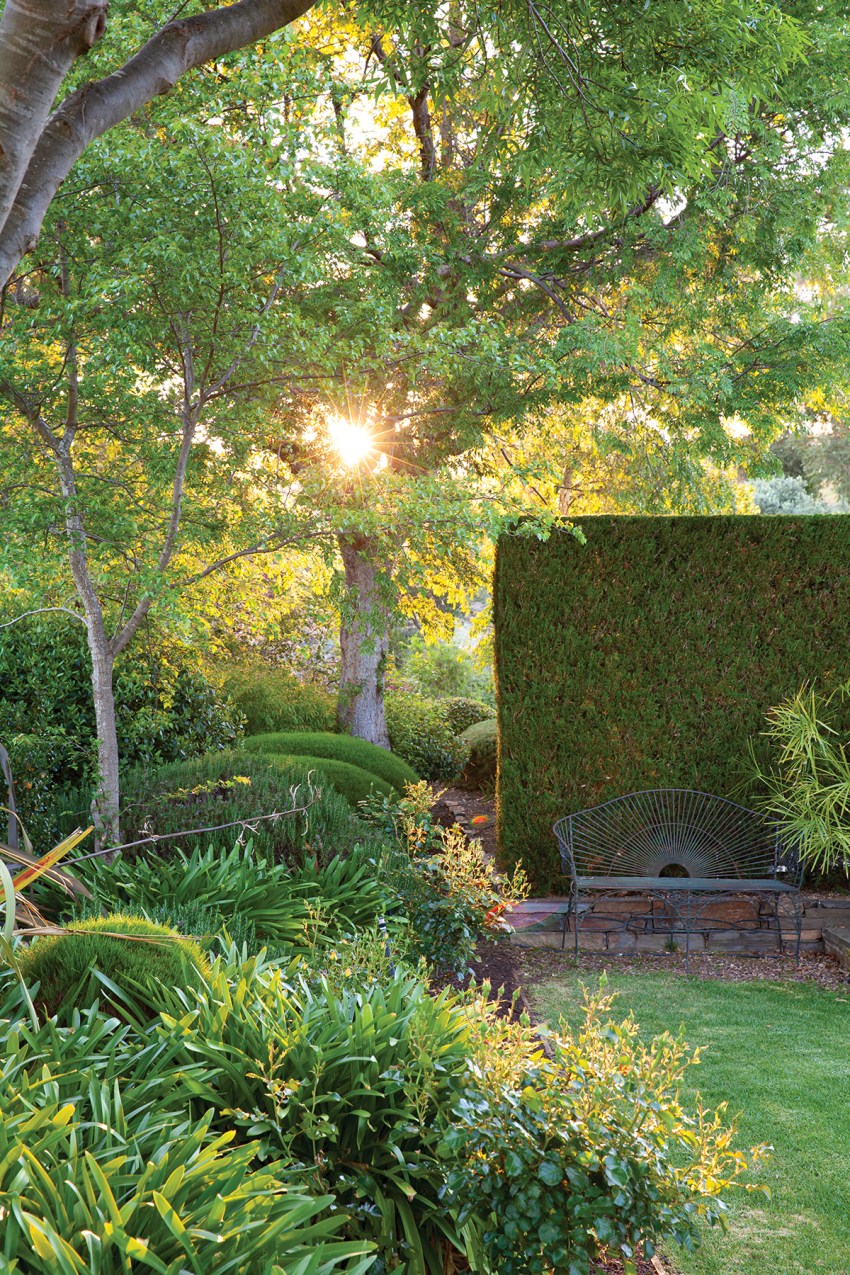
Outwards it went. Plant selection has been hit and miss, but failures added to the humus and helped turn infertile soil into a rich base. “We brought in truckloads of mulch in the beginning; we would’ve kept one of the local landscape companies in business. We’ve got enough garden now that we can make our own mulch,” says Deb.
“Now that the garden’s established, the trees don’t need the amount of watering they did to start with, and we’ve created a microclimate in the valley. We can grow a wider variety of plants than we could to start with.”
Deb devoured books by landscape designers David Hicks, Roy Strong and Paul Bangay in particular. Developing the garden was an incredibly busy time with their group of pharmacies and also driving their two daughters to school in Adelaide. “Quite quickly, it became too much for us to manage alone,” says Deb.
Subscribe for updates
Deb’s sister Donna Hughes and her partner Kumiko Hayashi began working at Mandalay about 15 years ago. “They wanted to work here and I said, ‘that’s ridiculous, you don’t know anything about gardening!’ They were keen to learn and so, we did learn together – we’re the three musketeers. I don’t make any decisions now about the garden without consulting them,” says Deb.
But Deb’s world was brought to a halt when Barry became ill and, sadly, died in 2011. “Those first two or three years after Barry died were awful. Both of my daughters were living overseas at that time, so Donna and Kumiko were my support,” says Deb.
“It all slowed down and there were two or three years where I really wasn’t clear about what I was going to do. He was a person who’s difficult to forget. We were together for 30 years and we had a lot of fun together.”
With her house, expansive garden and paddocks to look after, the sensible option would have been to sell. “The main reason I couldn’t bring myself to sell the property was because we had created it together. It’s where our children grew up and where we had family barbecues and picnics and lots of fun,” says Deb.
Deb and her team banded together and began working to transform Mandalay from a private family garden into a grand wedding venue. It gave Deb renewed energy, focus and purpose as she poured her efforts back into the garden.
“Once we started hosting weddings, it gave the garden new purpose. They’re fun occasions, I’ve got young people around all the time and I’ve got a party here every Saturday night,” says Deb.
Recent years have seen the garden develop into something truly special, while the significant reduction of stock from the paddocks has had a remarkable impact on the land. Natives have been planted and gum trees have even self-seeded.
“I’ve become quite intent on settling the garden into a greener setting by surrounding it with gum trees further out. This European-looking formal garden in the middle of a bare, desolate Australian valley looked odd to me. I didn’t want it to look like an oasis in a desert. We had to feather it in somehow,” says Deb.
“We don’t want it to become dense bushland because the fire risk is just too great, so managed open woodland is how I picture it and is probably closer to how it was 150 years ago.
“The property has a very different mood now. The moment the trees grew taller than the house was when the character of the garden changed. It suddenly started to feel like a mature garden. As you come down the drive, everything is hidden inside the trees,” she says.
Deb and her team have further developed the artificial wetland which she and Barry installed in 2005. Excavated and then lined with a geomembrane liner, the wetland stores the highly saline water which is a by-product of the dam. Juncus rushes flourish, as do the surrounding grevilleas, lomandra and banksias. Tortoises visit from the nearby dam, while native birds, ducks and moorhens enjoy it, too.
While the wedding business is a joy, it now serves a greater purpose at Mandalay, providing income that enables Deb to continue to develop the garden, remediate the paddocks and nurture the wetland.
What has Mandalay taught Deb about herself? “That I’m impatient,” she laughs. “I get told off by the garden team for being cranky. We’ve had people who’ve worked here for 25 years, and they’re proud of the garden. They’re part of it. That’s something quite special and very satisfying.”
And it’s the open garden days that are particularly special. Seeing garden-lovers strolling, sitting, absorbing and looking gives Deb a great sense of satisfaction. “The open garden days are special because we get people who wouldn’t normally get to see the garden. People will just stay for hours and hours, which is quite lovely and very rewarding. It’s very complimentary for it to have that much of an effect on people,” she says.
What was at first a project to create an ideal family home is starting to look more like a legacy – a notion not too dissimilar from some of the grand Roman gardens that were built for the enjoyment of the community and future generations.
“Once you get to this stage, you realise you’re creating something that’s not just yours anymore.”
This article first appeared in the Septemberr 2023 issue of SALIFE magazine.
Want to see more stories from InDaily SA in your Google search results?
- Click here to set InDaily SA as a preferred source.
- Tick the box next to "InDaily SA". That's it.