Success story
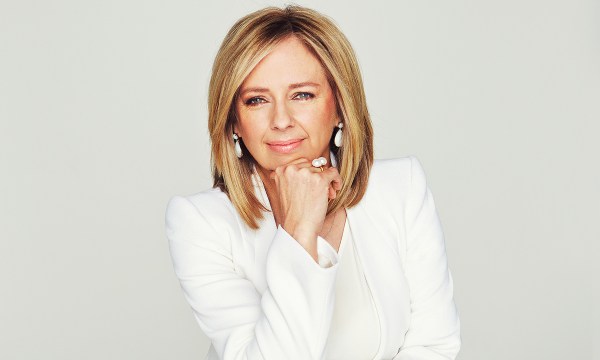
Journalist Helen McCabe never dreamt she’d end up as editor of the Australian Women’s Weekly. The former Hamley Bridge local shares the stories, struggles and successes that shaped her remarkable media career.
When Helen McCabe was appointed editor of the Australian Women’s Weekly in 2009, one of Australia’s most prestigious and high-profile media roles, some in the industry thought it was an odd fit.
The then-40-year-old journalist had a background in hard news, having forged a reputation as a tough political reporter in the male-dominated world of newspapers.
Ambitious and with her star still on the rise, Helen was working as the deputy editor of Sydney’s Daily Telegraph newspaper when magazines came knocking.
“I don’t think I had a full understanding of how prestigious it was at the time,” Helen says.
“I was a pretty hard news person by any standards, male or female, so I wasn’t into the soft shoots and pretty dresses and those soft features about juggling work and motherhood that the Weekly has made its bread and butter.”
So, how would this no-nonsense, hard-nosed news journalist run a women’s magazine built on stories about the royal family and television celebrities? By grasping the opportunity for change.

Helen with former Governor General Quentin Bryce, who was always a big supporter of Helen and the magazine.
“The interesting thing for me was, when I stepped into that role, I just suddenly saw the potential, like, hell this is an incredible opportunity,” Helen says.
“You’re talking to 50 per cent of the audience; the numbers were staggering, it was being read by so many people.
“And, you know, I had access – if you rang someone and said the Weekly is interested, it didn’t matter who you rang, people were willing to entertain the prospect of doing whatever story you thought was worth telling.”
Helen was keen to keep the spotlight on politics, albeit from a softer, more family-friendly perspective. Under her leadership, the Weekly was one of the first to do a profile on then-Immigration Minister Scott Morrison and his family: there were also stories on Julie Bishop, Jessica Rudd, Anna Bligh, Quentin Bryce and Jacqui Lambie.
“We also put Julia Gillard, the first female Prime Minister, on the cover and it was hugely criticised by conservative readers of the Weekly who said, ‘How dare you be political and put her on the cover’. It was a battle I enjoyed having,” Helen says.
“That was a historic moment, the first female Prime Minister, I don’t care what side of politics you come from.”

One of the Women’s Weekly issues that Helen was most proud of as editor, the cover featuring Turia Pitt.
Famously, the second time Julia Gillard featured in the Weekly things did not go so well – the photo showed the-then PM knitting a stuffed kangaroo for a royal baby present.
“She ended up losing the job to Kevin Rudd the day that issue came out and people used the shoot to criticise her and criticise me,” Helen says.
That controversy aside, Helen was always mindful to make her time at the Weekly count and she particularly championed the causes of women. In a bold move she put older women on the cover including South Australian food identity Maggie Beer, actors Judi Dench and Helen Mirren, and non-celebrities such as former Australian of the Year Rosie Batty. Rosie appeared on the cover in April 2015 as the face of the Weekly’s anti-domestic violence campaign; another of Helen’s initiatives.
But perhaps her proudest moment at the magazine was putting marathon runner Turia Pitt on the cover in 2014. Turia was badly burnt in a bushfire while competing in outback Western Australia in 2011. She suffered burns to 65 per cent of her body and was left with extensive scarring.
Turia appeared on the front of the magazine with the coverline “I’m the luckiest girl in the world”. It caused a sensation and the issue flew off the shelves, resulting in a seven per cent rise in sales.
“I think magazine industry experts would have expected the opposite because Turia represented a completely different approach to covers, but it was incredibly rewarding and I had great support at the time for trying different things,” Helen says.
You might like

One of the Women’s Weekly issues that Helen was most proud of as editor.
Other initiatives introduced by Helen during her time at the iconic magazine included the Power List (Australia’s 50 most powerful women), and campaigns such as the Women of the Future scholarship program for young women.
She was also in the editor’s seat for the coveted 80th birthday edition of the Weekly and managed to gain rare access to magazine favourite Princess Mary of Denmark.
The Weekly flew a stylist and journalist to Denmark and photographed the Princess at the palace wearing Australian designer outfits. It was a major coup. That same issue had an exclusive interview with Prince Charles.
“So, that was one of the best issues I ever edited,” Helen says. “I took it to my boss at the time and I put the cover in front of him, and it was this amazing shot of Princess Mary sitting on the floor in the palace, and I remember him saying, ‘wow’.

Helen with Jesinta Campbell, Peta Credlin and Annabel Crabb at the AWW Women of the Future awards.
Dealing with Danish royals, political powerbrokers and famous celebrities is a long way from Hamley Bridge, where Helen grew up on the family farm with parents Carmel and Gerald and brothers Adrian, who now works for Grain Producers of SA, Nick, a lawyer, and Luke, who played AFL football for Hawthorn.
“I describe them as the farmer, the lawyer and the footballer,” Helen laughs. “I’m the eldest but because I never married and had children, I always feel like I’m the youngest because they are all very grown up.”
As a kid growing up on a farm with three sports-mad brothers, Helen had no choice but to play footy and cricket, moderate skills she says she still employs today with her 10 nieces and nephews.
Country life also gave Helen invaluable insights into the diversity and depth of the average Australian beyond the city limits, she says; something she carried with her throughout her career.
“A lot of what you do in media is about understanding your audience and I think you have to have grown up outside the capital cities to get a good understanding of what Australia looks like beyond a fancy restaurant and a pair of high heels,” she says.

Helen with her Future Women team taken at their FW 2021 Leadership Summit.
At age 13, while at boarding school at Loreto College, Helen remembers the moment in the classroom when she first heard about a career as a journalist. With a natural curiosity and a sense of social justice even at a young age, the young student knew it was the path for her.
“It was a stretch though because a lot of journalism was nepotism; you get brought in by someone who knows you and you get a cadetship and away you go,” she says.
“I didn’t have that benefit and I really had to figure it out myself.”
After missing out on a cadetship at The Advertiser, Helen took on work experience at The Bunyip newspaper in Gawler, before being accepted into the UniSA’s journalism degree in 1986.
Politics was an early interest, inherited from her father, who had many politico mates. Regular visitors to the farm included John Olsen, who went on to become South Australian Premier, and former Defence Minister Robert Hill.

Quentin Bryce (far left) and Helen (second from right) at the AWW Women of the Future awards, one of Helen’s initiatives at the magazine to support and encourage young women.
After university, Helen did a brief stint as a television reporter at GTS-BKN in Whyalla, a regional rite of passage for many aspiring young journalists, before being offered a role with Seven News in Adelaide. Hard-working and with a drive to break stories, Helen’s talent soon saw her transferred to Seven’s Canberra bureau in 1993.
She admits the Canberra press gallery was overwhelming and intimidating for a young female reporter.
“In retrospect, I was not that old and I’m not sure I would want to do that to anyone else at that age,” she says. “It really was a baptism of fire.”
It was during these early years in television that Helen first experienced sexism in the workplace. As a young television reporter, there was an ever-present pressure around looks and appearance.

Helen jumped at the opportunity to become editor of the Weekly after a career in television and newspaper reporting.
“I was pretty cavalier about those things, in fact more than cavalier. I was difficult because if I had one more television executive tell me about my hair or my lipstick or what I was wearing, I would just explode,” she says.
“I just found that insulting, unnecessary, rude, frustrating and I was wildly unsuited to those conversations. So, it was probably not a great surprise that Seven didn’t renew my contract in 1996.
“I liked being a news breaker and I wanted to be at that end of it, not the sort of polished presenter that is required in television. Thankfully, things have changed quite dramatically and I see young women on television now who are still polished, but it’s not the only reason they’re on camera.”
Today, reflecting on her time at Parliament House in the wake of the Brittany Higgins rape allegations last year, Helen admits she did have “plenty of awkward moments”.
“I can honestly say I was actually shocked by Brittany’s story and the avalanche of stories that followed. I never, ever heard of rape or sexual assault occurring when I was working in the Federal Parliament, which I can’t quite reconcile. Was it better in the ’90s than it is today? If so, how?”

Helen loves to catch up with old friends and colleagues when they are all in Adelaide together including, (back row) Graham Crouch, Phil Coorey, Clive Mathieson, Helen, Anna Cock, Miranda Murphy, Sally Sara, (centre) David Gibson, and (front row) Fleur Anderson and Amanda Hodge.
In 2018, Helen launched an online magazine called Future Women with a mission to help women “connect, learn and lead”. In her role as founder and CEO, Helen says there is barely a day that goes by when she doesn’t reference Brittany Higgins.
“She has changed the landscape forever,” she says, “From a business perspective it has allowed Future Women to have conversations with men about the changing nature of workplaces. The fact is, young ambitious men will struggle to lead anything if they don’t figure out how to manage gender-equal workplaces.
“I can’t overstate the significance of what Brittany has done and I know it’s not been easy on her. I would also say, this is highly triggering and one thing we are at pains to say is, just because Brittany went public with her story does not mean you have to. Women need to be kind to themselves on this stuff. It is deeply traumatic.”
As to the lasting effect of the Brittany Higgins case, Helen believes there needs to be “significant change” in the Parliament House culture, starting with the banning of alcohol.

Helen, with swimmer Elka Graham, during a talk for International Women’s Day.
Subscribe for updates
“That would be very unfashionable but it would certainly go a long way towards providing a safer workplace for everyone,” she says.
Having spent years working in the male-dominated world of newspapers, including senior roles as the night editor of the Australian, as a London correspondent and finally as deputy editor of the Daily Telegraph, Helen says it was an even playing field with men early in her career. That changed, however, as she began to move up the ladder.
“A lot of blokes don’t like the women in charge and that you’re more competitive, so they play the more competitive game and it becomes more of a competitive sport,” she says. “You find yourself being described in ways that might seem unfair – you’re bossy, opinionated, tricky, difficult, hysterical, too hard, not hard enough, all those things.
“There were comments like, ‘She really just wants to be in television, not an editor, she just wants to be a television star’. You just feel like you’re always second guessing how they’re going to undermine your credentials.”
Helen admits the pressure took a toll and as she witnessed the daily grind of a newspaper editor close up, she knew it wasn’t right for her.

Helen enjoying a lunch back in SA with her oldest friend Sonya Unwin.
“I’m going to be super candid … I just looked at that job and what the editor had to do every day, the fights, the pressure, the intensity, the authority you had to have across not just the floor of a big newspaper, but with every senior player in Sydney, let alone the Canberra political machinations,” she says.
“If you are the editor of the Sunday Telegraph, you’re one of the biggest and most influential players in the country, so you have every politician and chief of staff knocking on your door. I looked at those jobs from time to time and it was a man’s world.
“I was very comfortable with the view that that was just too hard. I did not have that next level of combativeness, authority, strength to make that job even remotely enjoyable and I was pretty comfortable not doing it.”
Self-deprecating but with a strength and self-belief, Helen says she’s always been good at launching herself into the unknown through a combination of “naivety and stupidity”.
Her constant driver has simply been to tell interesting stories, particularly about and for Australian women.

It has become an annual tradition for Helen to have lunch with former Minister for Foreign Affairs Julie Bishop and media identity Annabel Crabb when they are all back in town for Christmas.
A particular career highlight was being asked to give the prestigious Andrew Olle lecture in 2015, where she used the opportunity to urge her audience, and the media, to keep the spotlight firmly on the issue of domestic violence.
The Weekly also won numerous Magazine of the Year awards under Helen’s leadership, and she was named Editor of the Year in 2015.
“It’s nice to have the recognition of the magazine industry. I think people in the industry were surprised and constantly questioning whether you could be as newsy as I was – or the word they loved to use was as ‘political’ – and still sell magazines,” Helen says.
“I think the magazine purist thought it was a bad thing. Now, I would say probably more strongly than I did at the time, that it was quite frustrating for me that women thought that women were not interested in the stories around their political leaders; that they are so disengaged from the political landscape that their magazine should never cover anything political. On the numbers I think, yes, we proved them wrong. Did we sell more magazines? Yes, we did.”

Helen as a young reporter for Channel Seven, circa 1990.
Helen left the prestigious editor’s role in 2016 after losing faith in the Weekly’s new German owners, Bauer Media.
“We had a CEO towards the end of my time who just had no understanding of Australian women and didn’t know the history of them or who they were or why they were of interest,” Helen says.
“I had one of the executives telling me that I needed to do more covers like this woman ‘Eta’, and he kept pointing at a cover and saying ‘Eta’. It was Ita [Buttrose]. She’s one of the most respected and loved women in Australia, as well as a woman who had edited this magazine, and he didn’t know any of that.”
After a six-month hiatus and reflection on where she wanted to head, Helen moved into the digital space, launching Nine’s lifestyle site 9Honey, before taking on the role of Nine’s digital content director. She then launched Future Women which she continues to run today with colleague and journalist Jamila Rizvi, whom she describes as the “voice of her generation”.
“It’s my most ambitious project really and it evolved out of my desire to do something about the gap in the market for storytelling for women who held jobs, broadly,” she says. “I say professional women but that’s not really true -– it’s women who work.”

A shot of the Canberra Press Gallery and Seven Network team in about 1995, including Helen at the back in red, and the “Demtel guy” to her right.
Future Women currently has three divisions: producing content, providing training opportunities for women and it has also recently launched a jobs academy to help women find employment, particularly those affected by COVID.
Away from work, Helen admits she’s not great at focusing on other things and she makes no apologies for that.
“Work is what I do for fun and I say that deliberately because I think a lot of women do beat themselves up about either not having a glittering career or not having three perfect children,” she says.
“I have tried over the years to be a bit more balanced in the way I approach life, but I really enjoy working so I’ve come to terms with that.”
Reading, staying up late to watch streaming services and enjoying great food and wine are favourite pastimes.
“And people,” she says. “I’ve collected a lot of people over many different jobs and phases in my life, so I never turn down the opportunity to spend time with people who make me laugh.”
Devoting time to the not-for-profit sector is another passion and Helen has worked with organisations such as the Australian Indigenous Education Foundation, Adopt Change, the Gidget Foundation, which supports the emotional wellbeing of expectant parents, and Bus Stop Films.

Helen, who is still based in Sydney, says she hasn’t ruled out a move back to Adelaide eventually. Photograph Jez Smith.
She also gets back to Adelaide regularly to see family and friends and hasn’t ruled out a permanent move back home.
“I have this strong sense that there’s going to be a point where I will end up back there,” Helen says. “I love coming home. You wake up on Saturday morning and my nephew is playing cricket in the As in Glenelg or one of my other nephews has just finished playing at Central Districts and is back playing at Hamley Bridge – that kind of stuff I love to watch. I will never have that in Sydney, no matter what I do.
“I set Future Women up to give me that freedom, if I wanted to rent a place in the Barossa and run the business I could, or at Henley Beach, where I’m close to the airport.”
She has been described by peers as a “media survivor” and has made her mark in the top echelons of Australia’s media industry. And while this 53-year-old professional is still fiercely driven to work hard for what she believes in, there seems to be a mellowing around the edges that Helen is enjoying.
“Age is a great leveller and the point you started out with is family; life’s not really about much else,” she says.
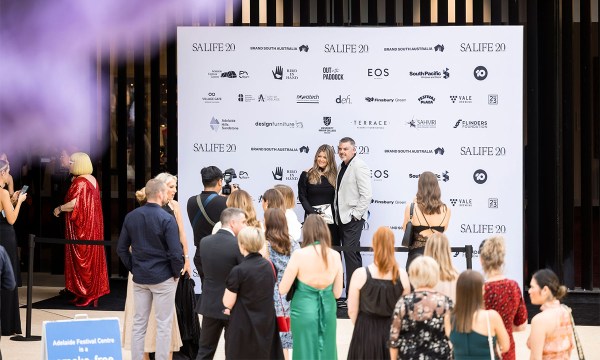
This article first appeared in the March 2022 issue of SALIFE magazine.
Want to see more stories from InDaily SA in your Google search results?
- Click here to set InDaily SA as a preferred source.
- Tick the box next to "InDaily SA". That's it.