Gillman has damaged SA’s rep: Spencer
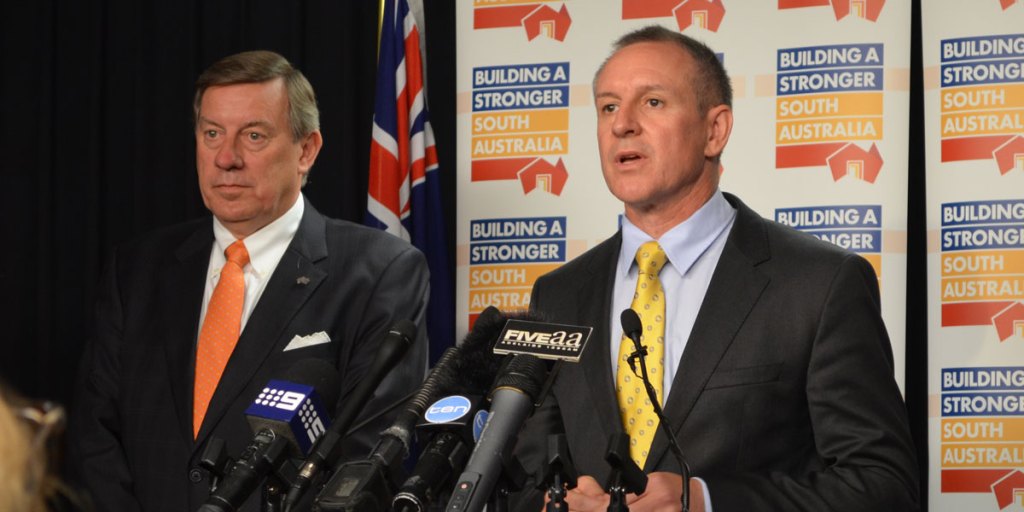
The man who first took the Gillman land deal to Premier Jay Weatherill says South Australia has suffered reputational damage from the ensuing controversy.
In an extensive interview with InDaily, Raymond Spencer, the chair of the state’s Economic Development Board, says he doesn’t regret championing the Adelaide Capital Partners (ACP) proposal to the Government.
However, he says investors now have questions about the risks involved in investing in South Australia after the deal became the subject of more than a year of controversy.
“I don’t think it’s been positive,” he said. “Whether it’s damaged it (South Australia’s standing) in the sense that we can’t recover from it, I’m not prepared to say that.
“Foreign investors look for a few things – speed of decision-making, an effective and understood process – and I think the reputation damage is probably there. But I don’t think it’s irrecoverable.
“What I have heard is people question – ‘how certain can we be that if we in engage in a process that, A, the process is going to work its way through in a reasonable time and, B, how certain can we be that we’re not going to become part of a negative campaign?’”
Spencer’s hope is that a new process for unsolicited bids to government, introduced last year, will clear up some of the confusion about the process.
Despite the negativity that has surrounded the ACP proposal, including a recent damning judgement from Supreme Court justice Malcolm Blue, Spencer says he took the deal to Weatherill in 2013 because it had clear merit.
You might like

He said the proposal filled a need for logistics support for the resources industries, and made use of land that was “relatively value-less to the government without some form of remediation”.
“Frankly, unlike many ideas we see at the EDB, they weren’t asking for us to help them get government money for everything,” he said.
“They were paying what I believe to be commercial rates for it. I don’t remember the numbers now, but I do remember that the range they were talking to me about, the economics were certainly north of the earlier transactions.
“Frankly, the other thing that had impressed me was they spent a hell of lot of money – hundreds of thousands of dollars – in thinking this through. The sophistication of the plan they put together didn’t happen on the back of a napkin.”
Spencer says the he took the plan to the Premier, and subsequently attended a meeting between Weatherill and ACP representatives.
That was the last he had to do with the process – with one exception.
“I did get a couple of updates from the ACP people who along the way got frustrated with how much time it was taking to get through the system,” he said. “While I empathised with them a bit, it wasn’t my role to intervene – and I didn’t intervene.”
When asked about Justice Blue’s criticism of the decision-making processes that followed, Spencer said he had no involvement.
“I’m not the person to judge all the things that happened – I have no idea.”
He says he has no regrets about his role in putting the ACP proposal before the Government.
Stay informed, daily
“I don’t regret it because I think it makes sense. But I wasn’t involved in what happened after that.”
Spencer hopes the new process for receiving unsolicited bids from the private sector will clear up suspicion and uncertainty.
However, he had some harsh words that seemed to be aimed at the business critics of ACP’s deal.
“Let’s go back to the bottom line here: we’ve got to create jobs, we’ve got to put in place infrastructure to support the evolution and development of the economy, and we need people to invest in that.
“And there is a bit of a mentality that has to be addressed in this state – that we’ll only do it if the government provides a soft landing for us … which these guys were not asking for.
“There’s what I call the ‘waterski mentality’ – it’s alright for you to build the boat, it’s alright for you to make the engine, it’s alright for you to have the ropes and the skis, but now we want to get on the ski without investing.
“We have to have a way of rewarding people who take risk and who show initiative and innovation, otherwise they’re not going to do it.
“That doesn’t mean we shouldn’t have an open and transparent process.”
Adelaide born and educated Spencer, who is also the chairman of the SAHMRI, was appointed chair of the EDB in 2011, following a long and successful career in business in the USA, Europe and India.
He echoed Weatherill’s recent warning that South Australia needed firm action to avoid going into “genteel decline” – but he went considerably further.
“We have to attract bold and new ideas,” Spencer said. “We’re not going to survive as a state without change and without bold action.”
Want to see more stories from InDaily SA in your Google search results?
- Click here to set InDaily SA as a preferred source.
- Tick the box next to "InDaily SA". That's it.