Exploring the wonders of anatomy, one body part at a time
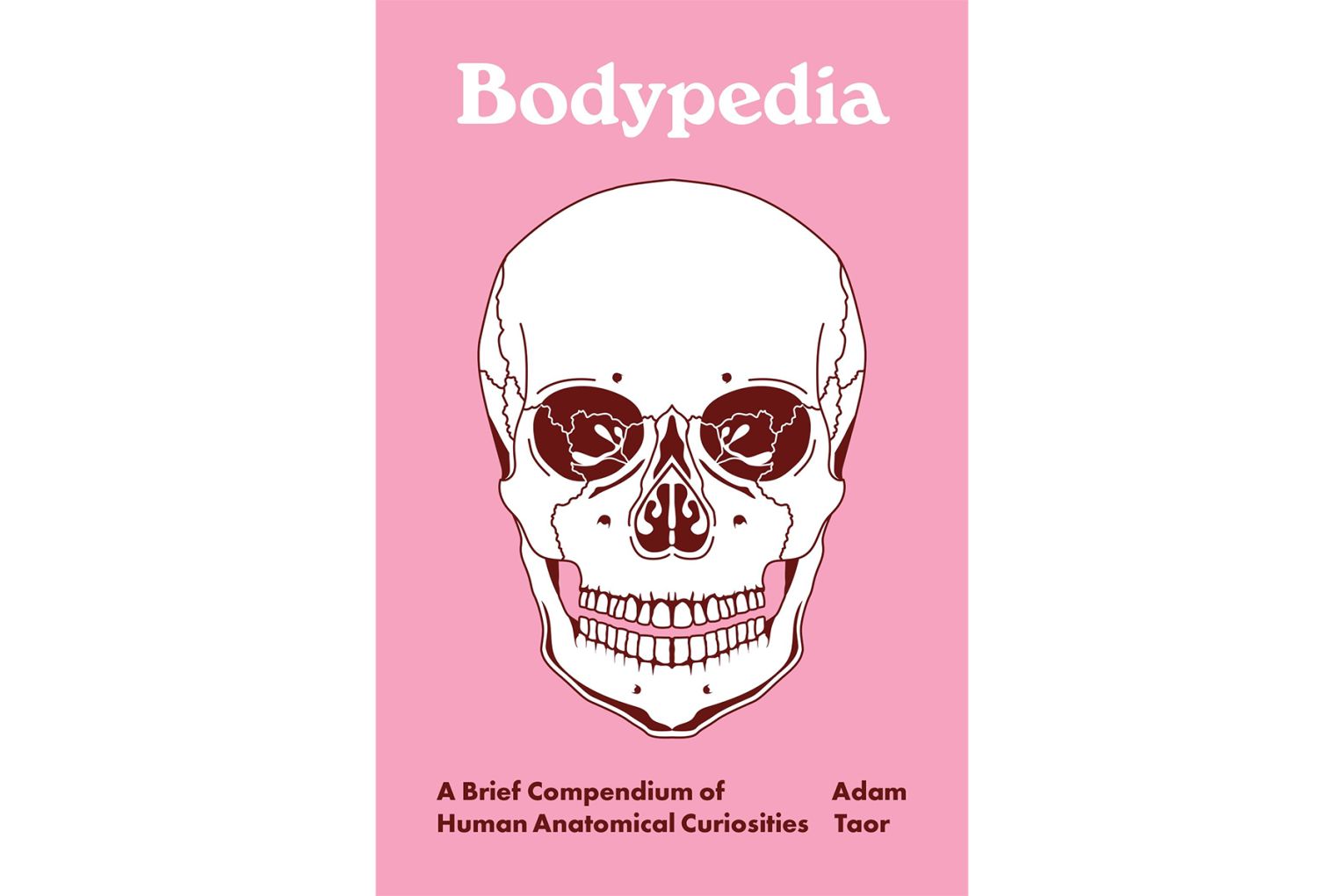
Bodypedia is a lively, fact-filled romp through your body, from A to Z.
About a decade ago I recall a fleeting vision of Stephen Fry in David Attenborough-pose beating through the New Zealand undergrowth in “pursuit” of the moa (a search bound to be futile as the last specimen expired about the time that Gutenberg entered print).
At the end of this scene, Fry whispered: “And if there’s anything else you’d like to learn about extinct New Zealand birds, you can always look it up on Kiwipedia.”
In barely 20 years, Wikipedia has become the world’s go-to ready reference, dealing a death blow to the serried ranks of Britannica and World Book that once graced the shelves of the literati.
Because of it, the suffix –pedia (Greek for “field of knowledge” or “education”) is as immediately recognisable in our times as it was a century ago.
Bodypedia is the latest in a series, originally from Princeton University Press, whose fields of knowledge are signified by their respective titles. (Its fellows include Beepedia, Dinopedia and Neuropedia.)
Here are stories on topics ranging from the beastly origins of goosebumps to the definitive answer to that Jimmy Ruffin Motown classic What Becomes of the Brokenhearted. These tales of entrails and tubes, both Eustachian and Fallopian, explore the wonders of anatomy, one body part at a time.


With a keen scalpel, author Adam Taor (pictured) peels away the layers to shine a light on interior truths, solving some very odd conundrums along the way.
What distinguishes crocodile tears from yours? What possessed Isaac Newton to stick a needle into his eye socket? The answers truly lie within, told with exuberance and ingenuity, mystery and, in sum, the history of you as it has never been told before.
On this deep dive, prepare to meet the geniuses, mavericks and monsters (sometimes all of the above) who got their hands bloody discovering, dissecting and naming your parts.
Bodypedia can make for gritty reading at times, but the word corpus is adorned with exquisite drawings by Nathalie Garcia, which add substantially to the book’s appeal.
Along the way, myths go pop: the notion that we humans use only 10 per cent of our mental capacity is busted. But academic rigour (Taor is a qualified doctor) never makes his prose dry and inaccessible.
For instance, we learn that the brain’s “120 billion neurons and 100 trillion interconnections make it arguably the most complicated object in the known universe”. Without missing a beat, he then adds: “Yet mostly just plain old water, with the consistency of blancmange.”
prepare to meet the geniuses, mavericks and monsters who got their hands bloody discovering, dissecting and naming your parts
This primer is brimming with facts. Some are counter-intuitive (“The number of individual bones in our body falls as we get older”. The cause? Fusion.) Others are simply strange: “We are taller in the morning than in the evening, after a day of being upright.”
Subscribe for updates
At times one wishes a kindly editor had administered a mercy killing to some of the puns that were barely functioning, such as “horrific gore-topsies”. But on many more occasions they will produce the medically useful information that you, the reader, are still alive, on the principle that “I LOL, therefore I am”.
You might raise the rafters with laughter, as I did, on reading Taor’s description of the homicide committed by Hamlet’s uncle Claudius as “a peculiarly Bard-ass murder”.
Happily, Taor’s flashes of wit are not limited to puns. Take this, for instance: ‘The phrase: ‘Are you a man or a mouse?’ is grossly unfair on the twitchy, beady-eyed creatures. And on the mice.”

New terms (especially appealing to Scrabble devotees) await you here: such as thixotropic (the quality of a semi-solid that flows more easily after being shaken, such as ketchup).
Ever heard of “the Woozle effect”? Neither had I. It’s the academic equivalent of Goebbels’ observation that the more times a lie is repeated the more it will be believed. “A source being frequently used to justify a claim that it doesn’t support” gives the claim undue credibility.
The term stems from Pooh and Piglet’s belief that they are “following the tracks” of an imaginary creature named the Woozle, whereas they are simply going around in circles and the tracks they pick up are their own.
No part of the body is left unexamined. Don’t be surprised if one evening, around dinnertime, the term “fungiform papillae” is on the tip of your tongue, as that’s where the taste receptors they refer to are located. Our noses can discern dozens of aromas, but our tastebuds recognise only five varieties: sweet, sour, salty, bitter and umami (Japanese for savoury).
It’s entirely apt, then, that this pocket-sized reference work is one to dip into and savour for a minute or three at eventide, or any time really and, as Taor is devoted to the art of the pun, may I point out that it’s no easy thing to be in fun-guy form for 200 pages. But he is.
Bodypedia: A Brief Compendium of Human Anatomical Curiosities by Adam Taor, NewSouth (UNSW Press), $29.99.
Want to see more stories from InDaily SA in your Google search results?
- Click here to set InDaily SA as a preferred source.
- Tick the box next to "InDaily SA". That's it.
Free to share
This article may be shared online or in print under a Creative Commons licence