Legends of the Fall: Mythology and the Anzacs
A new book by former funnyman turned academic Steve Vizard explores the Anzac legend and the mythology surrounding it.
Truth telling can go too far … and as a journalist I can’t believe I just typed that.
Yet 110 years after the beach landings that Australians sell to themselves as “the birth of the nation”, there could be no better time to ask: Is factual history enough to sustain collective self-belief or do we need a higher power – the power that the ancient Greeks called myth?
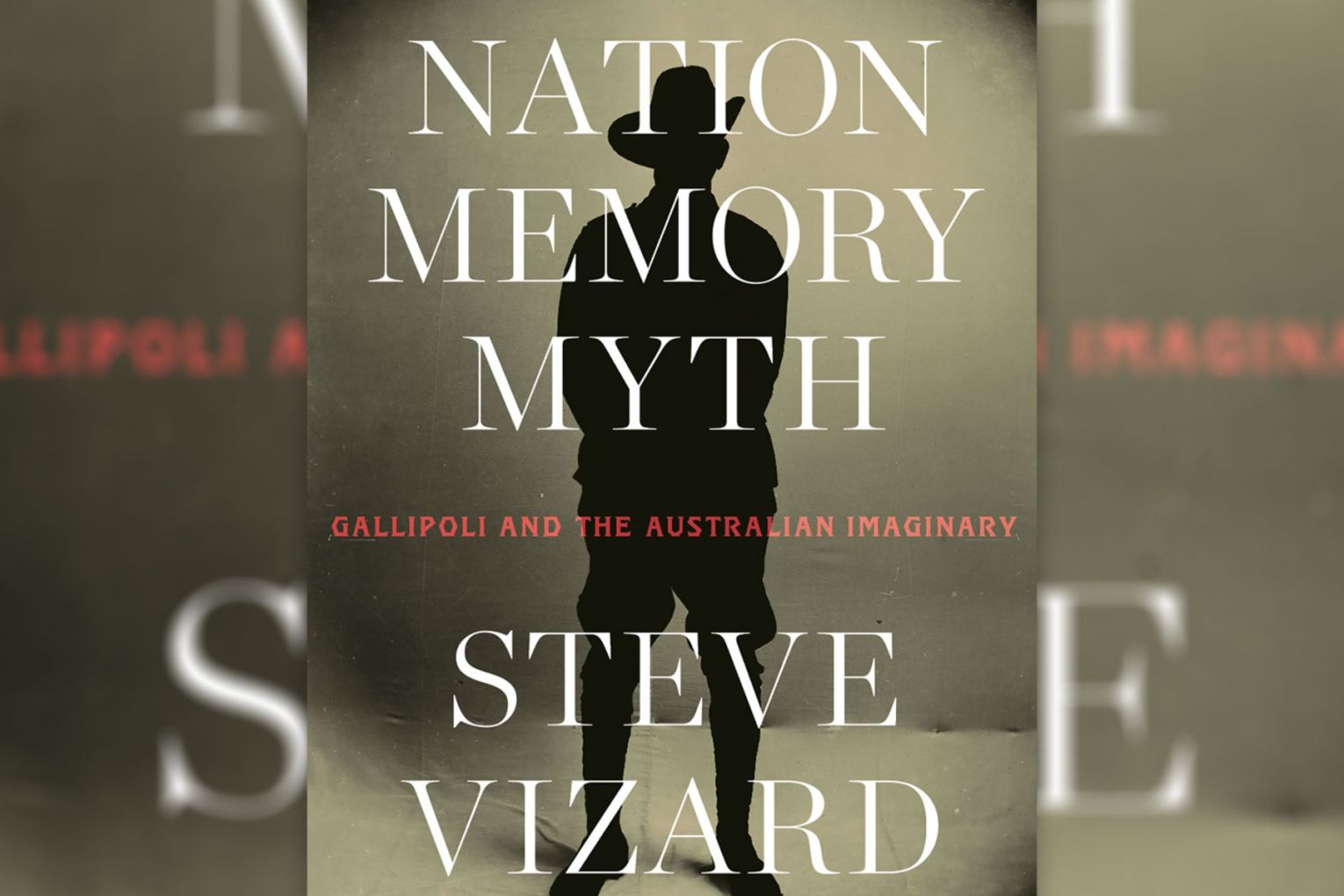
With pitch-perfect timing, Steve Vizard – funnyman turned serious-minded professor – tackles this deeply meaningful question in his latest book, Nation, Memory, Myth.

While giving due honour to the importance of facts, he writes: “It is the normal work of the modern historian to try to dissolve myth.”


Vizard makes a robust case why, psychologically, all of us – and by extension our homeland – need to believe in something whose veracity is not provable.
As he goes on to point out, “Founding myths are not dependent on truth value for their efficacy … the question of truth is hardly relevant, for myths appeal to imagination rather than to the intellect; hence perhaps their power.”
‘The notion of an early trauma has its roots in narrative conventions running back to the myth of the Fall’
Even after acknowledging the limits to its usefulness, this is a publication that offers truth by the bucketload, some of it quite dark. Unexpectedly, we’re confronted with the disturbing idea that the formation of a collective identity is dependent on having a collective memory of trauma. Or, in words cited by the author, “the notion of an early trauma has its roots in narrative conventions running back to the myth of the Fall”.
Subscribe for updates
This core thesis alone makes Vizard’s offering a worthy addition to our Anzac literature – an achievement beside which its shortcomings pale into relative insignificance. Also, it answers one of his own challenging questions advanced early in the piece: Why can’t a nation simply choose to replace its myths with more contemporary, worthy stories that might better reflect the current values of a modern society?
While his thesis is sound, the arguments with which he buttresses it are sometimes questionable. To start with, he defines civilisation as “a predominantly Western development, born of Greco-Roman cultures and wholly manifested in the Mediterranean world and its colonial outposts”.
That “predominantly” is carrying a load of weight, and to the extent that it works as a qualifier the use of “wholly” on the next line negates any justification for it. Even traditional Western historians, from Edward Gibbon in the 18th century and those who followed, conceded that China, India, Japan, along with the New World’s Aztecs, Mayans and Incans – had civilisations.
At least it was important to explore the meaning of “civilisation”, and whether it’s to be taken as a synonym of city-building or culture (two distinct phenomena). While the word “emotion”, it’s safe to assume, would be recognised by all Vizard’s readers, rather negating the point of a 91-word footnote attempting to define it.
Whether you’re someone for whom Anzac is “ancient history” or someone who thinks its commemoration glorifies man’s basest instincts, or the proud wearer of great-grandad’s medals every April 25, you are certain to find this book both all-embracing and fair-minded.
While it is good to see space given to those who reject the romanticism of carnage (cue historian Clare Wright’s pungent observation “Gallipoli – with its militarist narrative of youthful sacrifice, not youthful optimism – was not the birth of the nation. It was the death of the nation we were well on the way to becoming.”), one waits in vain for some personal reminiscence of how Childe Vizard (with apologies to Lord Byron) first made Anzac’s acquaintance.
That leaven of personal encounter would have made this admirably scholarly work much more appealing to the general reader. There is irony here: Vizard rightly privileges the importance of storytelling over the mere recitation of dates and facts. Yet, amid a mountain of footnotes, we never encounter that refreshingly human touch that would tell us what in the author’s family or geographical background kindled his own connection with Anzac’s meta-narrative.
In compensation, we are given a generous helping of insights from a capacious intelligence (such as the observation that the Anzac myth can “bend” left in accounting for the Digger’s suspicion of authority and egalitarianism, or “right” in its respect for tradition and the prominence given to British heritage).
One lovely effect deployed with a seasoned scriptwriter’s skill is the interpolation of passages from Peter Weir’s 1981 film Gallipoli, which Vizard rightly describes as a masterpiece. In its own way, this is too.
Nation, Memory, Myth by Steve Vizard, Melbourne University Press, $39.99; mup.com.au/books/nation-memory-myth-paperback-softback
Want to see more stories from InDaily SA in your Google search results?
- Click here to set InDaily SA as a preferred source.
- Tick the box next to "InDaily SA". That's it.
Free to share
This article may be shared online or in print under a Creative Commons licence