Diary of a Book Addict: Divorce, desire and dystopia
Divorce and midlife breakdowns are key themes across two memoirs and a speculative novel reviewed by our books columnist this month. She also casts her eyes over the Miles Franklin Literary Award’s eclectic 2024 shortlist.
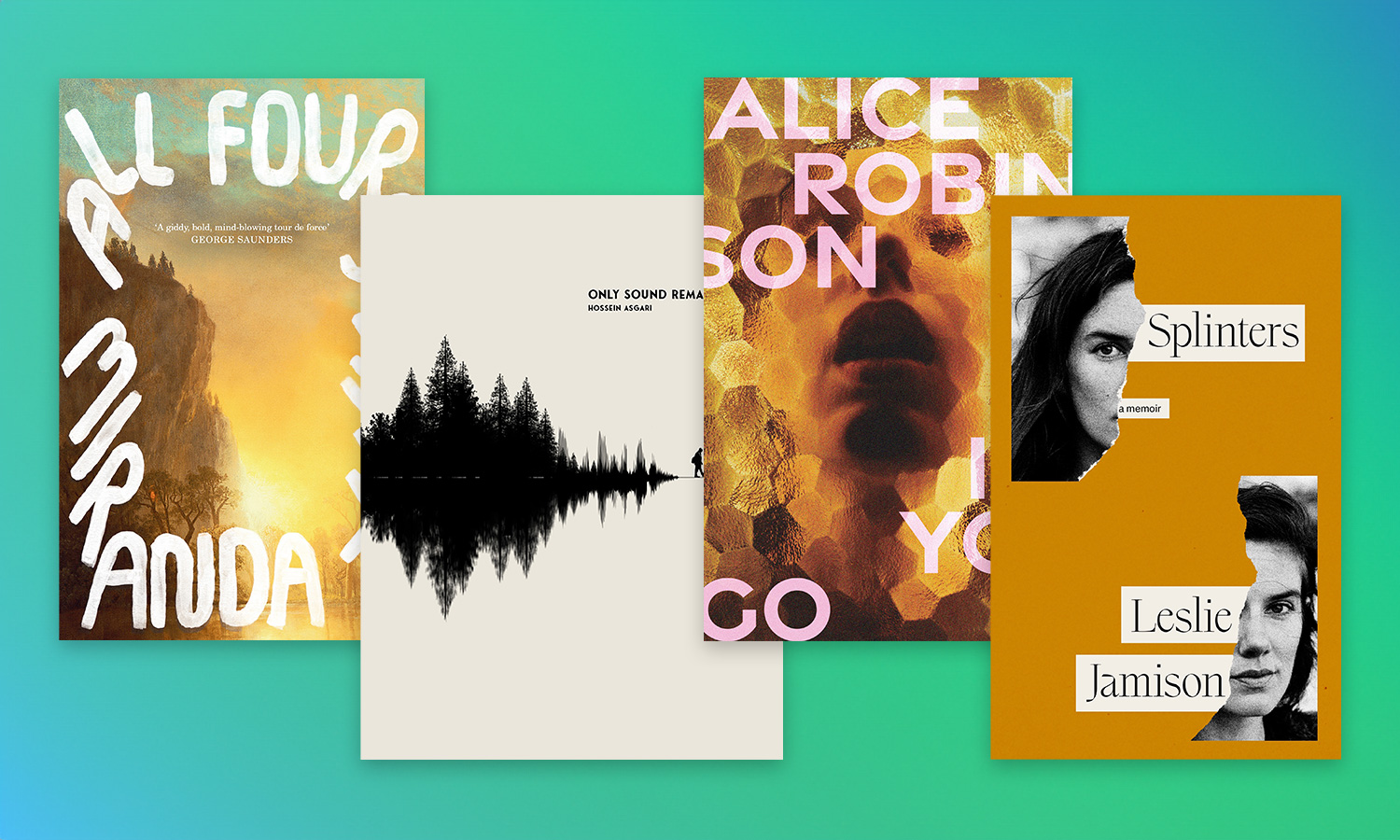
This month, I’ve been reading books about women who have midlife breakdowns. Yes, I am in fact 48 years old. But no, I’m not having a breakdown. It may be because my own chaos is long behind me, my child is reared and I’m more settled than I’ve ever been, with a very nice husband I like to watch CNN and drink tea with at the end of an evening, that I am less enamoured of Miranda July’s All Fours (Canongate) than many readers seem to be.
The New York Times dubbed All Fours “the first great perimenopause novel”, which piqued my interest. The 45-year-old protagonist, like July a niche-famous artist, scores a payment of $20,000 from a whiskey company for “a sentence about hand jobs” she’d written years ago (this also happened to July) and plans to spend it on a road trip from Los Angeles to New York. But less than an hour from home, she instead checks herself into a motel and spends the money paying the wife of a 31-year-old car attendant she randomly fancies to lavishly refurbish the room in a lush, pink fantasy. What happens next blows her life up.

July writes crisp, enticing prose and I began the novel intrigued. In the opening chapters, the protagonist tells her best friend she hates transitions: “Whatever state I’m in, I just want to stay in it.” It sets the stage nicely for the opposite to happen.
The protagonist says she is determined to “never become rigid”, but in fact has careful routines for everything (even avoiding rigidity, through a weekly secret junk food day with her best friend, “my one chance a week to be myself”). She’s unconventional, but also obsessively calibrates herself and her actions against how they’ll be interpreted, particularly by her more conventional husband. Her most touching and authentic moments are with her seven-year-old child, Sam, and her best friend: with both of them, she just is.
In her deeply feminised motel room, where she stays for two and a half weeks, she connects with her true desires. There are some wild sex or almost-sex scenes, including a sexual tease involving a tampon, and there’s a lot of dancing. It signals the protagonist getting back in touch with herself, through her body – a process that continues, in sometimes surprising ways, when she returns home. That’s also when the perimenopause comes into it, as a doctor’s visit reveals the role of hormones in her regular 2am insomnia, her fizzing anxiety, and her new itch of instability and desire.
I see why women are connecting with July’s portrait of a carefully controlled (if bohemian-styled) woman blowing up her life in a search for authenticity. And it is pretty interesting to see what a woman’s fantasy midlife crisis looks like. But I eventually found the performativity of her character exhausting. Of course, that’s part of the point – she’s exhausted by herself. “I was too far-fetched for any admirable person to commit to,” she reflects, remembering meeting her husband. “So I changed, matured, and that had turned out very well. Mostly.”
You might like

Of course, changing who you are to suit someone else rarely turns out well – in the long run, at least. Leslie Jamison’s divorce memoir, Splinters (Granta), also reflects on this idea of recalibrating yourself to match another person: primarily her ex-husband, a novelist, but also her post-separation lovers. It’s a habit she learned early; she describes her lifelong trick of intently listening to her terminally unavailable father and crafting follow-up questions to indicate she understood him. “I always tried to be the things I thought he wanted from me.” Her mother, she writes, is the only person she never needed to impress. “Her love was not a fish I did my seal tricks for.”
 Splinters, a memoir in fragments, is an intricately observed meditation on the inherited nature of love and relationships – with divorce and new motherhood as its central concerns. It opens with Jamison and her 13-month-old baby arriving at their temporary one-bedroom flat with “garbage bags full of shampoo and teething crackers”. (That this roughly mirrors an episode in my own life is perhaps why Miranda July’s chaos fantasy doesn’t speak to me.) Such vivid specificity mirrors Jamison’s key advice to her writing students. Another important thread concerns art, ego and ambition.
She aptly describes the days of early motherhood as both “too much” and “nothing at all”. Ironically, her inability to throw herself into work during that time forced her to pay attention to her marriage and admit she didn’t want to be there. She blames his anger and her vigilance, as well as her instinct to parent alone and to look to her mother over her husband (who has experience – a child from his first marriage) for help. Jamison herself spent just four or five nights total with her own father in the six years after her parents’ divorce when she was 11.
I mostly loved Splinters, which is (again, mostly) forensically self-aware and rich with jewelled insights, like the ache of hearing her ex-husband’s inflections in her daughter’s voice when she returns from days in his custody. I admire her honesty in – like Rachel Cusk in her divorce memoir, Aftermath – admitting to the “animal” part of her that thinks about her daughter: “She belongs with me.” She reluctantly concedes two nights a week custody to her ex, though. “Loving her meant wanting something different for her that was different from what I had.”
Like Miranda July, Jamison can be a lot. One close friend tells Jamison she’s “fatigued” by their friendship and her constant flux; Jamison admits she has a point. There’s something beautiful and true in this, and in the fact the friend later reappears. No wonder Jamison says close friends, like her mother, mean “safety” to her.
Maybe she has a better instinct for friends than for men. Though she takes some pains to capture the initial attraction and the nuances of her ex-husband, it’s perhaps telling that one of those attributes is “he didn’t deform himself to say whatever he thought someone wanted him to say”. One post-separation partner, a hedge fund manager, is hypercritical. The other, a self-dramatising itinerant rock star, is “a quilt of red flags stitched together”.
Jamison describes a photographer she admires as “excavating beauty that was already there” in his work, and I recognise that quality in her work, too. Nothing feels confected. Though my one lingering hesitation about this book concerns authenticity and omission.
On page 42, over a handful of lines, Splinters mentions that Jamison’s ex-husband, novelist Charles Bock (who she calls “C”), had a child from his first marriage, whose story they agreed not to tell. But it doesn’t tell us the child was 10 or 11 years old at the time of their separation, called Jamison “mommy”, and had lived with them full-time throughout their marriage. (Bock’s first wife had died – which we are told.) I understand omitting the child’s life from the story, to protect its privacy. But surely we could have had an extra sentence simply telling us these extremely relevant facts that affect how we read the events of the book? (Which Google easily yields.) I feel, too, that information belonged earlier in it.
Subscribe for updates
Australian novelist Alice Robinson explores motherhood, divorce, art and ambition through a speculative novel set 100 years in the future, If You Go (Affirm Press). Her previous two novels were recognised by major awards, and the most recent, The Glad Shout, was set in the aftermath of a Melbourne destroyed by climate disaster. Here, 40-year-old protagonist Esther wakes up with a breathing tube down her throat, in a seemingly deserted facility where she’s lovingly tended by someone she’s never met, Grace. Her calls for her children are dismissed. As she slowly mends from whatever has happened to her and recovers her “precarious health”, she remembers her life.
 Like Leslie Jamison, Esther’s parents divorced when she was a child, and she later divorced her children’s father. (Though unlike the relatively privileged Jamison, who has a nanny and a university job, Esther materially struggled in the aftermath.) Also like Jamison, the fictional Esther strives for fairness in remembering her ex, noting “every one of my complaints about him can be matched”. And she describes a similarly surreal sense of time with children: “They would be gone before I had to time to raise them, and I would be trapped with them forever.”
I need to be careful not to give too much away about Esther’s circumstances, but I think it’s safe to reveal that in this future, the world’s current crises have only escalated, with devastating results. That world, however, does not loom large in this novel, except in passing. This is a bit of a pity, as Robinson’s passages viscerally describing it, late in the novel, are marvellous. But I get it – the novel’s focus is intimate and interior, on the domestic life Esther has lost.
Its main threads are her life with her children and kind psychiatrist husband Jean-Paul (the most thinly sketched character, perhaps purposely), and her childhood spent with her brilliant, emotionally unavailable mother, Vivienne, a world-famous feminist whose career seems modelled on Germaine Greer’s, and her much-warmer father, Charles, and her stepmother. The contrasting environments are deftly illustrated by Vivienne having “never hung any pictures or seemed to worry about windows being bare” and Charles’ “devoted attention to aesthetics”, from arranging curtains to plumping pillows.
After at first living in itinerant share-houses with her mother following her parents’ divorce, Esther is left at her father’s farm one day on her mother’s way to the airport and a new life in London. She benefits from her new environment, but grieves and grows to resent her mother, who returns years later. With her spiky complexities and sometimes surprising emotional register, Vivienne is my favourite character. As in Splinters, inherited cycles of relational damage run throughout – here, both within families and in the fate of the world itself.
“You feel oppressed by the standards you believe your mother failed to meet when she was raising you,” Jean-Paul tells Esther. “But you don’t need to worry about all that … You just need to do what comes naturally to you.” She tells him to fuck off and not “headshrink” her.
 The Miles Franklin Literary Award shortlist was announced this week, and it’s the most eclectic collection of books I can remember seeing on this list. It rewards risk and innovation. Only one of the six books is published by a big publisher (Penguin Random House). It’s Anam by André Dao, a brilliant, haunting meditation on family, memory and history through a grandson trying to understand his grandfather’s long imprisonment. I loved this book.
There’s an Adelaide author on the list, too: Hossein Asgari, whose Only Sound Remains, a father-son novel about the Iranian diaspora and the life of a controversial poet, moves between Adelaide and Iran. It is one of two novels published by tiny independent publisher Puncher and Wattmann. The other is Wall by Jen Craig, a brilliantly obsessive novel about an artist clearing out her father’s house, with an eye to transforming the contents into an art installation. Craig’s previous novel, Panthers and the Museum of Fire, was longlisted for the Stella Prize.
Two novels are published by Giramondo, a small literary publisher that is no stranger to award shortlists. The first is Waanyi writer Alexis Wright’s genre-bending, tragic and comedic family epic Praiseworthy, which also won this year’s Stella Prize; its judges called it “perhaps the great Australian novel”. And then there’s Hospital, Bengali writer Sanya Rushdi’s autofiction exploring psychosis from the inside, set in a psychiatric hospital. Gregory Day, a lovely writer, has been shortlisted for the Miles Franklin before (as has Wright, who won for Carpentaria in 2006); his novel The Bell of the World, a song to natural wonders set in the 20th century, is published by Transit Lounge.
The winner will be announced in August.
Jo Case is a monthly columnist for InReview and deputy editor, books & ideas, at The Conversation. She is former bookseller at Imprints on Hindley Street and former associate publisher of Wakefield Press.
Want to see more stories from InDaily SA in your Google search results?
- Click here to set InDaily SA as a preferred source.
- Tick the box next to "InDaily SA". That's it.
Free to share
This article may be shared online or in print under a Creative Commons licence