When I was 18 years old, in 1994, I moved out of home, to a flat near the university where I was studying my first (unfinished) writing degree. I would spend the next few years in and out of inner-Adelaide share houses. I ate spoonfuls of Milo when I ran out of money to buy chocolate. I walked from my house at the edge of the Parklands to the Exeter or the Crown and Anchor to see my housemate’s band open for The Superjesus and You Am I. His dog ate the phone cord while I was talking in the hallway and I was made to pay for it. My first serious boyfriend gifted me handwritten letters and mix tapes dominated by The Cure.
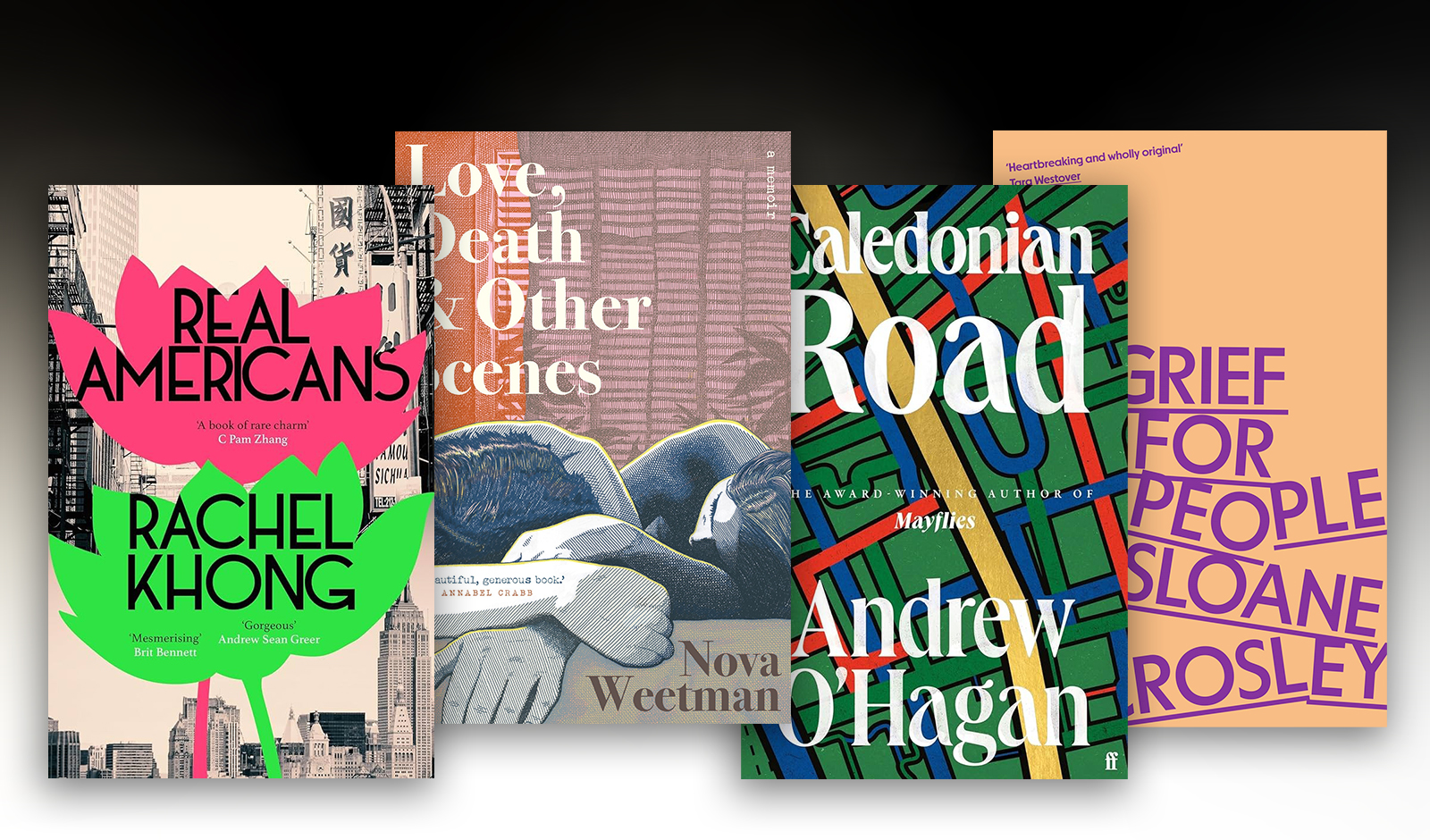
Why am I telling you all this? Nova Weetman’s Love, Death and Other Scenes (UQP), her heartbreakingly gorgeous memoir about losing her beloved partner of 26 years, playwright Aidan Fennessy, who died of cancer during Melbourne’s 2020 COVID lockdowns, sparked memories of all of the above.
Weetman’s book is, primarily, a love letter to the partner she lost, the father of their two children – and a mediation on grief, loss and memory that ranks, for me, with Didion’s The Year of Magical Thinking. But it’s a book that, like a life, contains multitudes.
“At eighteen, I moved from the outer eastern suburbs of Melbourne to the inner city, trying on a new version of myself,” Weetman writes in the first act of her book. “Wearing tartan skits and op-shopped cardigans, I began reading Sylvia Plath poetry on the weekends, daring to believe I was the first to discover her.”
 In 1992, she first spies Aidan, trying on a vintage coat in “a no-name op shop”, and knows they’re destined to be together. She admires his “hair that looked important, and a way of moving that said he was much more comfortable in the arts world than me”. After a long friendship and seven-year “embarrassing” crush, they hook up one drunken night, and nine months later, in 1999, they move in together. In one of many devastating asides throughout, Weetman writes of that first night living together that she assumed “Aidan and I would grow old together, never considering the possibility something would derail that”.
Their shared life, over more than two decades, is beautiful – enviable – but intermittently hard, as long relationships invariably are. They prioritise creating art and are happily poor, never owning a house together, but both succeeding in their careers: Weetman writing young adult novels and Fennessy writing plays. They have two children. They weather the deaths of close family members.
You might like

A handful of years before he is diagnosed with cancer, Fennessy is submerged by serious depression. When Weetman’s beloved mother dies, he apologises that he can’t be more present for her grief. “I’m done with death,” he says, and she is shocked. “But now that he’s gone too and my grief has leaked out onto everything, I understand what he meant.”
This book is woven with scientific framing elements, too, like the mechanics of memory and the science of remembering a first romantic kiss. How we “other” those with cancer to make us feel safe, despite (or because of) the fact that “most of us will be diagnosed with a form of cancer at some point in our lives”. The theory versus the reality of euthanasia when your loved one is dying. (Aidan, like most who want the option to die, didn’t use it. It’s “a safety net”.)
I sobbed through this book in a way I very rarely do. (I cry at films all the time; rarely at books.) And yes, it’s partly because I saw my life reflected in its details. And because I fell in love with this family, this bohemian romance anchored in gritty reality. But it’s also because this book is so beautifully, seamlessly written – and because it uses art so evocatively as consolation, solace and context. Of course, the uniquely awful circumstance of losing the person you love during a COVID lockdown heightens the experience.
When Aidan dies, “There is a Light that Never Goes Out” by The Smiths is playing on the bedroom laptop. There is no funeral for this much-loved man, because COVID regulations limit funerals to eight people. He is cremated at a funeral home in regional Victoria; Weetman and her children must apply for official permission to farewell him there, then present documentation to police.
On the way home, the car radio is playing a tribute to Aidan. Tim Rogers has recorded a Morrissey song, one of Aidan’s favourites. “As Tim sang the words,” Weetman writes, “I sobbed into the steering wheel.” As I read this section, my own husband heard me from down the hall and came to ask if I was okay. And I hugged him very, very tight before I kept reading.
 Sloane Crosley’s slim volume, Grief is for People (Serpent’s Tail), is her memoir of grieving her best friend and former boss, Russell, the formidable, razor-witted former head of publicity at Vintage (a division of Random House), who died by suicide in 2019. Crosley, who writes amusingly about behaving ridiculously during her job interview, aged 25 (he leaned in and asked her, “What are you doing?”), worked under him until she left to concentrate on her writing career. Like Weetman’s memoir, it’s about more than grief. And again, a major thread is a love of art and writing.
Subscribe for updates
Russell, who adored musicals and literature and flea markets and collected aesthetic objects (to, it seems, the point of hoarding), migrated to New York after “spending the first half of his life trying to blend into a world where he could never fully be himself”. His decline is paralleled with the decline of the publishing industry he loved and identified with, and readers like me will relish (and perhaps recognise) this deeply bookish aspect of Crosley’s story. I loved stories like the one about Russell faking an email to prank her that her idol Joan Didion had said, after meeting Crosley, that she didn’t want to work with someone so young, and being the publicists for notorious literary liar James Frey, in the audience for the Oprah book clubs.
“What I never told Russell was that in the same way his specialness had found an annex in great authors or inanimate objects, mine had found an annex in him,” she writes. Without him, she remains defined by the ways he shaped her. Crosley is known for her archly funny, self-deprecating personal essays (which I have always loved) and two novels (which I haven’t read in case I didn’t like them). In a way, this elegantly shaped grief memoir represents a shift.
But really, it’s more of a development than a transformation: the arch Nora Ephron wit is still there. (And this book’s revelation she’s a Heartburn fan makes sense.) For example, on a festival visit here, Australia’s “resolute lightness” is compared to “the cheer of southern California crossed with the repression of England”. (Yikes!)
The zany mishaps and misadventures of the essays are here, too, albeit layered with freighted material and meaning. The loss of Russell is set against an earlier loss of sentimentally valuable jewellery, when her apartment was burgled, and when the losses become entangled in her psyche, she chronicles the extraordinary lengths she goes to to retrieve some of the jewellery, ending in a series of tensely cinematic encounters in New York’s diamond district. In inexperienced hands, the effect could be disastrously glib, but in Crosely’s sixth book, it’s deftly managed, as if her great influences – Didion’s crisp imagery and observations (and, of course, the legacy of her great grief memoir, The Year of Magical Thinking) and Ephron – have come together.
 Grief was a key theme of Rachel Khong’s compact, dryly comic debut novel Goodbye Vitamin (2017), about a lost adult daughter returning home to look after a father with Alzheimer’s. Her much-anticipated follow-up, Real Americans (Hutchinson Heinemann), is very different: a big fat, multigenerational New York novel (with a terrific section set in Mao’s China) exploring family, identity, wealth and values.
Unpaid magazine intern Lily Chen is rapidly running down her savings in New York when she meets handsome blond Matthew, a financier who’s generous with his resources but reticent for her to get involved with his billionaire pharma family. Decades later, high schooler Nick Chen lives on an island in Washington state with his reserved mother Lily, who doesn’t allow the internet at home, and he longs to know who his father is. The answer, courtesy of a home DNA test (taken at his best friend’s urging), will change his life and open the door to a series of family secrets that will verge on the supernatural. I thoroughly enjoyed this epic novel – and you might too! – but didn’t love it like I did her debut.
Another big, fat big-city novel I ripped through this month was Andrew O’Hagan’s magnificent, self-consciously Dickensian London novel, Caledonian Road (Faber). Money, primary narrator Campbell Flynn muses in the opening pages, is “an English mystery seldom unravelled”. And while this novel, which rotates its narration between a sometimes-dizzying array of characters, is steeped in the worlds of art, media, literature and academia – Campbell is a left-wing art academic who’s just anonymously authored a self-help book called Why Men Weep in Cars – the alternately corroding and cushioning influence of money is at its core.
Hagan takes decisive, effective aim at the protected, self-perpetuating systems of privilege that either overtly or implicitly implicate the ruling classes – of Britain and the wider world. There’s a criminal ring of trafficked migrants and networked weed farms, run by a Polish character, and father-son Russian oligarchs with connections to Putin, who launder their money through the English aristocracy and art world. This novel is thickly populated with precarious levels of corruption and cover-up, and part of the game of reading it is anticipating who’s poised to fall, how and when – and who will stay down.
The sprawling cast of characters includes Campbell’s wildly successful celebrity children – a sweet former model and an arrogant high-priced DJ, his serene psychologist/author wife and the aristocrat mother-in-law he worships. A series of scandals threatening to ruin Campbell’s right-wing best friend from Cambridge, a retail tycoon who has secretly loaned him vast sums of money, establishes tension early on.
 Milo Mangasha, one of Campbell’s students and a gifted hacker, has found in Campbell (his academic supervisor) an outlet for his grief over an activist mother who died of COVID – and has a plan to teach him a lesson. “I see you’re a hero to yourself,” he tells him, early on, after being annoyed by a performatively provocative Atlantic essay, “The Art of Contrition”, for which Campbell is getting kudos in the book’s early pages. “Your academic friends think it’s about the terminology,” he continues. “They think if they police the words the world is gonna be alright.”
O’Hagan has been nominated for the Booker three times, and so it’s unsurprising that at its height, this is a beautifully executed novel. This is his first state-of-the-nation novel – The Great English Novel, perhaps – so it’s also unsurprising that it’s uneven. Some narrators are more vivid and believable (and thus interesting) than others.
Campbell Flynn, with his working-class Scottish roots and his work as a public intellectual, is the closest to O’Hagan, and feels most lived in – and the satire of the academic, art and media worlds through him is delicious. A cohort of disadvantaged young men of colour involved in petty crime, friends of Milo’s, are the weakest link, feeling sketched more than inhabited. But I much prefer a flawed, interesting novel than a dull one that’s well executed in every way. (Sadly, there are many of these.) I’m still thinking about this world and characters – and it’s crying out to be adapted as a streaming series.
Jo Case is a monthly columnist for InReview and deputy editor, books & ideas, at The Conversation. She is former bookseller at Imprints on Hindley Street and former associate publisher of Wakefield Press.
Want to see more stories from InDaily SA in your Google search results?
- Click here to set InDaily SA as a preferred source.
- Tick the box next to "InDaily SA". That's it.
Free to share
This article may be shared online or in print under a Creative Commons licence