Diary of a Book Addict: Eight of the best from 2023
From a prize-winning Irish dystopic novel and an unsettling psychological thriller, to an epic work of investigative reporting and an excoriatingly honest Australian memoir, our books columnist share her favourite reads from the past 12 months.
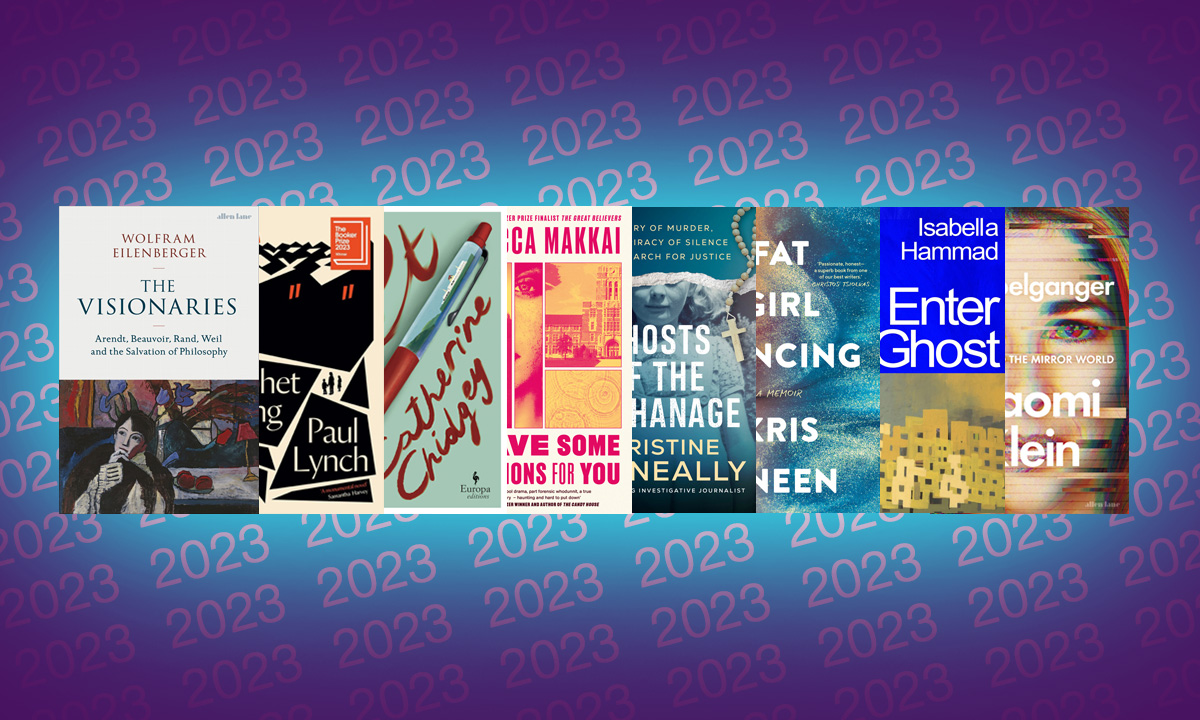
Hanging out in Imprints recently, I moaned that I’d had a bad reading year. But looking back to decide my favourite books of 2023, I realised that’s not even remotely true – it was tough to whittle my picks down to eight.
I can see that the books that stayed with me have something in common, too: they all helped me make sense of the strange, fast-changing world we’re living in right now. And, of course, they’re all simply excellent reads, beautifully executed.
FICTION
Prophet Song, by Paul Lynch (Oneworld)
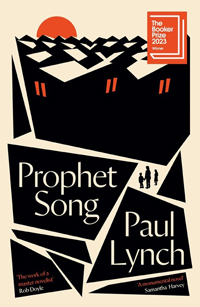 The winner of this year’s Man Booker Prize is a claustrophobic, relentless, yet often darkly beautiful dystopic novel, set in a parallel version of Ireland with a recently elected authoritarian government.
In the opening pages, Eilish Stack, a scientist and mother of four, opens the door to the secret police looking for her trade unionist husband, who will soon be disappeared. Politics infiltrates her workplace, young men are drafted into army service and the population begins to monitor itself. As societal collapse escalates – in a way recognisable from real-life authoritarian regimes worldwide – so does the tension between ordinary family life and the previously unimaginable. Eilish describes a “creeping sense of double time as though her life were unfolding twice along parallel paths”.
While Prophet Song has been compared to 1984 and The Handmaid’s Tale, its systems of oppression are less inventive and therefore, in a time when Donald Trump looks like he may be re-elected in the US and the Israel-Gaza war is raging, more terrifying.
For me, it felt more like The Road (which Lynch has cited as an influence), Philip Roth’s excellent The Plot Against America (which imagines a fascist-leaning America during World War II) and, in places, Children of Men – particularly with its emotional heft. Lynch’s central question is less “how might this happen?” than “how would it feel if this happens?” – and especially, heartrendingly, “would you know when to leave?” I will not stop thinking about this novel for a long time.
I Have Some Questions for You, by Rebecca Makkai (Hachette)
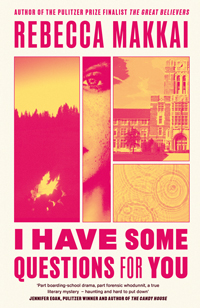 I thoroughly enjoyed this very clever, intricately characterised blend of ’90s campus novel, dark academia, murder mystery and meta commentary on true crime. (How could you not love a novel that does all these things?)
When Bodie Kane returns to the elite boarding school where she remembers being miserable, to teach a course on podcasting, she doesn’t expect to find herself investigating the case of her murdered former roommate Thalia, alongside her students. But she’s soon drawn to the flaws in the case and the possibility the school athletic trainer jailed for Thalia’s murder might be innocent.
You might like

Her reckoning with the case, in this place from her past, also becomes a reckoning with who she is and how this place shaped her. And when her sort-of-estranged husband contacts her to confess an artist ex-girlfriend has gone viral with a claim of sexual coercion, she’s also forced to reckon with her ideas of sex and power – and the culture. And of course, the true-crime podcast that frames much of the plot and our assumptions about crime and criminals (and who they are) is also under Makkai’s very canny microscope.
There were so many lines and moments that felt resonant to this reader, who grew up in the ’90s – from the Kurt Cobain shrine and ironic fashion statement of wearing “Chucks” with dresses, to the horrified reassessment of learned norms of gender and consent. And lines like: “I felt ancient, from some elderly generation that didn’t understand the basics of the twenty-first century.”
Enter Ghost, by Isabella Hammad (Jonathan Cape)
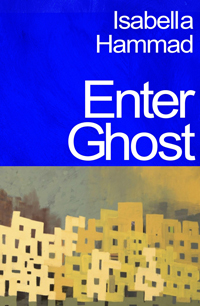 British-Palestinian author Isabella Hammad is on this year’s Granta Best British Young Novelists list. Enter Ghost, her second novel, follows Sonia, a successful actor, from her London home and a failed affair to visit her sister in her family’s homeland, in Haifa. She plans to lick her wounds in seclusion, but is instead drawn by a charismatic director, Mariam, to take part in a subversive production of Hamlet, to be performed in classical Arabic and staged in the West Bank.
This gorgeous novel is knotty with bitter nuance: for instance, Sonia recalls her grandparents had Jewish friends, “but during the summers of heightened violence these friends always disappeared”.
The prose is impressively restrained and concise, rich with jewelled, distant observation – reflecting Sonia’s carefully cool surface shielding a raw vulnerability. As a child, a pivotal encounter with a hunger striker deeply affected her and her sister. While her sister returned from their British exile to live and work close to the place where their grandparents held onto their home as much of the Palestinian population fled during the 1948 Nakba, Sonia stayed away.
Sonia’s involvement with Mariam and the production gradually thaws her boundaries, reconnecting her to Palestine, family and a buried part of herself – and to the realities of daily life on contested land. (The latter includes encounters with Israeli security forces that range from mundanely controlling, starting with the novel’s very first line, to intensely threatening.) “If we let disaster stand in our way we will never do anything,” the intrepid Mariam tells Sonia at one point. “Every day here is a disaster.”
Pet, by Catherine Chidgey (Europa)
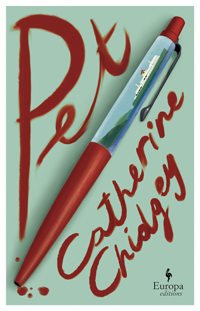 Catherine Chidgey’s slyly incisive novel is a 1980s-set psychological thriller by an author whose previous novel, Remote Sympathy, was a Women’s Prize-longlisted Holocaust novel. What does that mean?
While on one level, Pet is a propulsive page-turner that luxuriates in its period detail – a white Corvette, taffeta harem pants, televised beauty pageants – Chidgey’s version of the Mean Girls novel (a literary genre that includes Margaret Atwood’s Cat’s Eye and Zadie Smith’s Swing Time) is infused with a chilling message about the dangers of a charismatic leader who encourages a group’s worst impulses. And it’s an excoriation of a culture that values shiny surfaces and social validation over substance and authentic connection.
Twelve-year-old Justine, who recently lost her mother to cancer, is captivated by her charismatic blonde teacher, Mrs Price, who manipulates her students to compete to be in her inner circle – and not just ignores, but encourages, social hierarchies and exclusion. When Justine’s Chinese best friend Amy is targeted, she’s forced to choose between a friendship that feels like family and popularity. Meanwhile, the discordant notes planted from the early pages build to a frightening crescendo – and by the end of the novel, nearly everyone is somehow complicit.
Profoundly unsettling and absolutely enthralling, this novel, too, seems especially resonant right now, as abuse of power by females teachers is back in the headlines, with the recent film (May December) about the Mary Kay Letourneau case. “She knew everything about us, Mrs Price,” recalls Justine. “She saw everything.”
NON-FICTION
Ghosts of the Orphanage, by Christine Kenneally (Hachette)
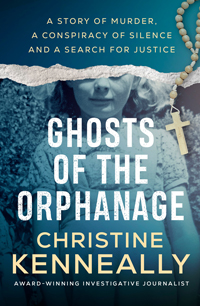 Christine Kenneally’s epic work of investigative reporting exposes the widespread abuse suffered by children in 20th-century orphanages all over the world, where she identifies “the overwhelming sameness of their experiences: the same schedules, the same cruelty, the same crimes committed in the same fashion, then covered up by the same institutions”.
When I read, a few months ago, about the shocking hunt for suspected secret graves at Kinchela Aboriginal Boys’ Training Home in New South Wales, I was horrified. But I was not surprised – because I had read this book, where Kenneally hears multiple survivors of one notorious American orphanage, St Joseph’s, describe witnessing deaths that were never recorded, as well as horrific abuse and bullying.
Subscribe for updates
Kenneally admitted that, like the son of one of the survivors, she often struggled to believe what she was being told: not because she didn’t trust her interview subjects, but because their stories seemed outside reality. “Now I know that some people have always moved freely between the reality that is plain to see and its hinterlands: the institutions, the orphanages, the places where things happen between closed doors and stay hidden,” she writes.
Ghosts of the Orphanage is not an easy read, due to its material, but I think it’s an essential one – and it’s immaculately executed by one of Australia’s best, and most under-recognised, literary journalists. Kenneally doesn’t just confront us with a litany of horrors – she invites us to get to know her subjects as fully formed people who suffered incredible injustices, and whose humanity has been ignored for too long.
Doppelganger, by Naomi Klein (Allen Lane)
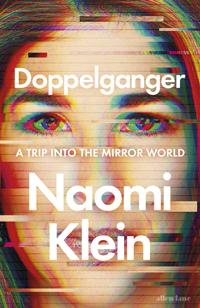 In her fascinating new book, anti-capitalist researcher and writer Naomi Klein plumbs the depths of our post-2020 political polarisation by following an obsession with her public “doppelganger”, Naomi Wolf (best known for The Beauty Myth, now a regular on Steve Bannon’s podcast). The trail takes her into the heart of the “Mirror World”, where inhabitants include Tucker Carlson, Donald Trump, wellness influencers, and anti-vax “momfluencers”.
“What is it called when a society divides into two warring factions, both of which are convinced that the other has been replaced by doppelgangers?” she writes. That, she says, is at the heart of the divide: we each think our own side is the one living in reality; the effect is to dehumanise the other.
She warns that, while liberals may laugh at Wolf’s spurious facts – she’s now an avid conspiracy theorist – to underestimate the appeal of people like her is dangerous. She writes of Wolf’s messaging: “The words she was saying were essentially fantasy. But emotionally, to the many people now listening to her, they clearly felt true.”
Ultimately, Klein concludes, both the right and the left sense that something is very wrong with the world. And many conspiracy theories (the CIA-backed coup in Chile and ExxonMobil’s exploitation of the war in Iraq) are true: “The system is rigged, and most people are indeed getting screwed.” The bogeyman, she concludes, is the capitalist system.
Klein’s rigorously questioning book is an intriguing and urgent exploration of the world we inhabit – its wisdom spiked with dark wit, playfulness and personal reflection. I loved it.
The Visionaries: Arendt, Beauvoir, Rand, Weil and the Salvation of Philosophy, by Wolfram Eilenberger (Allen Lane)
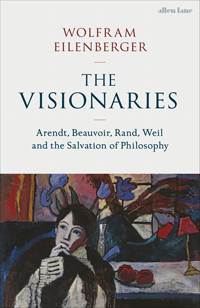 Sometimes your favourite books surprise you. I had no idea I wanted to read a book about four women philosophers during one crucial decade that spanned the rise of Hitler to the middle of World War II. But this narrative history uses these four ground-breaking thinkers – all outsiders – as a way to tell the story of how the world drastically changed during that decade and to explain how the philosophies they pioneered continue to shape our thinking.
The Visionaries introduces us to “existentialist” Simone de Beauvoir, who would become a second-wave feminist icon with The Second Sex, as she finishes her first novel at the famous Café de Flore in Paris. French socialist Simone Weil points out the structural similarities between newly fascist Germany and Stalin’s Soviet Union. Ayn Rand, an emigrant to New York whose family lost everything in the Russian revolution, also draws parallels between Hitler and Stalin, who “share a violent state subjugation of each individual human being in the name of an ideally exalted collective”. Weil’s solution is the collective; Rand’s is the elevation of the individual.
Eilenberger draws fascinating parallels between his subjects throughout, sometimes by comparing their systems of thought, sometimes by recording encounters between them. Simone de Beauvoir was mystified when she met Simone Weil. “Never again since then had she met a person who could spontaneously burst into tears because somewhere far away a disaster was happening that seemingly had absolutely nothing to do with one’s own life.”
Studded throughout are extraordinary details of these four women’s lives, including Jewish German Hannah Arendt’s flight from Berlin in 1933 with her mother, after being arrested and released by the Gestapo.
Fat Girl Dancing, by Kris Kneen (Text)
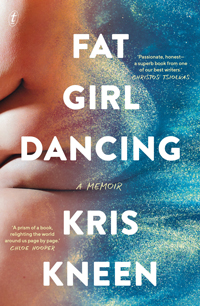 Kris Kneen is an exquisite writer, and I have loved all their memoirs. Fat Girl Dancing, the third, explores their tortured relationship with their body – and their struggle to continue to exist in the world in that body – in excoriatingly honest detail. “Fatness is the thing that I don’t talk about,” they write. “Fatness is the thing that scares me most about myself.”
In less accomplished hands, Kneen’s despair would overwhelm the book, and the reader. But like Anthony Mullins’ exquisite photographs of Kneen’s naked curves, interspersed throughout Fat Girl Dancing, this book resists being seen one way. It invites interpretation. And it asks the reader to conceive a whole from its series of beautifully composed parts, bringing their own experiences and projections to bear on it.
“How does a person come to know that they are different from the children around them?” they write. “To measure themselves against a set normal and find themselves lacking?” But while Kneen has often tried to change themselves to fit what’s normal, the book’s trajectory is one of accepting themself as they are – which means getting rightly angry at a world not designed to fit their body, and disposed to judge it. It also involves trying scuba diving, revelling in burlesque dancing, relishing cooking and painting their own glorious series of naked self-portraits.
Being an artist is about looking, forcing yourself to see what’s actually there – and finding a way to communicate it. In Fat Girl Dancing, Kneen once again proves they are a true artist, one whose insights will resonate with anyone who, for any reason, struggles with not feeling “normal”.
Jo Case is a monthly columnist for InReview and deputy editor, books & ideas, at The Conversation. She is an occasional bookseller at Imprints on Hindley Street and former associate publisher of Wakefield Press.
Want to see more stories from InDaily SA in your Google search results?
- Click here to set InDaily SA as a preferred source.
- Tick the box next to "InDaily SA". That's it.
Free to share
This article may be shared online or in print under a Creative Commons licence