Why Brendan Goh is hooked on stand-up
Brendan Goh’s first attempt at stand-up left him despairing that he wasn’t ‘Kathy Griffin funny’, but after finding the courage to try again and tell his own story, the Malaysian-born gay comedian has found his groove.
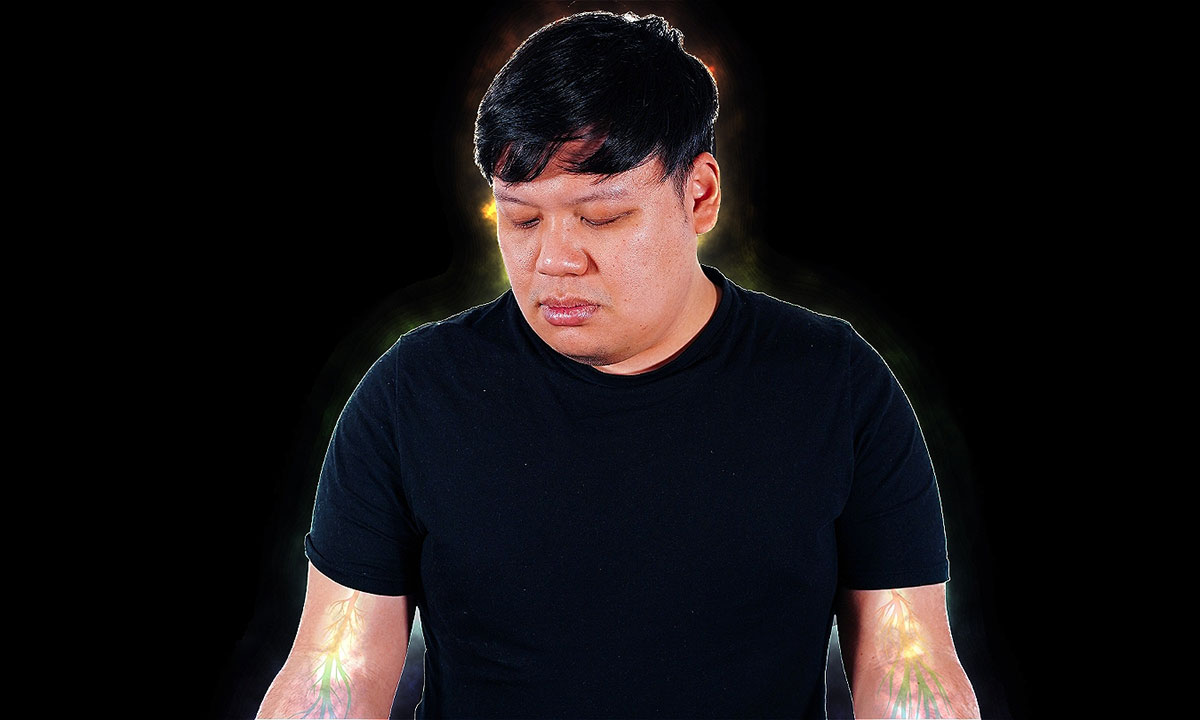
“Gay first. Chinese second.”
Brendan Goh is gearing up to make his debut with a one-hour special at Adelaide’s Feast Festival.
He agrees to be interviewed in Jibbi & Co, a chic lakeside cafe in one of Adelaide’s trendiest new suburbs, Lightsview. He also agrees that the interview may be recorded.
“Recorded for quality and training purposes,” he quips, quick as a flash.
It turns out that he is on home territory with recordings. The comedian’s day job is with a call centre.
It is oddly prescient. Goh has enough professional cred to merit a solo stand-up show with Feast but he is still finding his way in the grand scheme of high-profile comedy. He has a message to impart but, in terms of being “heard” and “seen”, he still feels like a little fish.
Before relocating to Adelaide in September last year, Goh spent most of his life in Kuching, the capital and the most populous city in the state of Sarawak in East Malaysia. When asked about his experience growing up there, he makes a humorous sideswipe by praising its local cuisine before diving into the nitty-gritty – its lack of LGBTQIA+ rights.
“We are known for really good food, but as a queer person, obviously growing up there was not the best,” he says.
“If you think different, or you act different from what is considered normal, people don’t take it in very well.”
Malaysia is a multi-religious country with Islam as the state religion. According to the Population and Housing Census of Malaysia conducted in 2020, 63.5 per cent of the population is Muslim, 18.7 per cent Buddhist, 9.1 per cent Christian, and only 1.8 per cent is unknown or non-religious.
“My parents are Buddhist,” says Goh, adding that his family is private, but dysfunctional.
You might like
“My journey of coming out wasn’t like, ‘Oh, he’s gay and we have to fix him.’ My journey of coming out was like, my dad caught me watching gay porn.
“They don’t want to address it.”
Political censorship followed Goh into comedy clubs in Malaysia. Being an outspoken and confident gay comedian, he is honest about his experience on stage, although still apprehensive about the audience’s reaction. He encountered an obstacle when he decided to transition from open-mic performances to weekend comedy shows.
In an open-mic event, participants are free to go up on stage and express themselves as they wish. Weekend comedy shows are curated with commercial considerations. They are more cautious of sensitive material.
“One comedian said to me, ‘It is not that we don’t want to book you. We are just afraid, because once you come out, you would shift the energy so badly that it is going to ruin the whole night. And more importantly, maybe people will report to the police and put you in danger.’”
Fortunately, the local comedy community was supportive of Goh’s work. It eventually included him in the weekend shows.
Goh indicates that comedy clubs in Malaysia have become more fearful and strict after a controversial incident took place in The Crackhouse Comedy Club in July 2022. During an open-mic night, a participant introduced herself as a Malay Muslim, then proceeded to remove her tudung and outer clothing on stage to reveal a tank top and a mini skirt underneath.
After facing massive backlash and the involvement of law enforcement, the comedy club was sealed without prior notice from the government.
Goh says other comedy clubs started monitoring and censoring the sets of open mic-ers. Luckily, soon after that, he received his work visa and moved to Adelaide.
Comparing the comedy scene in two cities, he says Adelaide audiences are more eager to listen and learn about cultures and experiences other than their own. Goh points out that many Malaysian audience members value and respect a comedian only after they succeed overseas. He calls it “certified funny by white people”.
"Stand-up comedy helps because it’s like you go up on stage for five minutes, let it all out, and then move on with life"
Goh’s creative energy has been in him since he was young. Prior to stand-up comedy, he channelled his creativity into writing and theatre until he experienced a depressive period where he lost motivation to pursue art.
“I was in the period of my life where I had no friends. It was quite lonely. I lost confidence in myself as a theatre kid, which made it hard for me to invest into theatre.
“I wasn’t doing well as an actor. I felt like I was being treated a little differently. I don’t think it was a gay thing, but more of that I’m from East Malaysia and I’m not private school-educated. It was a class issue.”
Yearning for a creative outlet, he discovered stand-up comedy, which he found required less time and emotional investment than theatre. Goh can perform without experiencing the post-show blues that usually follows a theatre season.
“I had found that outlet for me to express myself. Stand-up comedy helps because it’s like you go up on stage for five minutes, let it all out, and then move on with life.”
Subscribe for updates
He tried stand-up comedy for the first time in 2014 for a competition.
“Didn’t go so well,” he admits.
He thought to himself: “I’m not Kathy Griffin funny. I give up.”
Although it was a short-lived and discouraging experience in comedy, Goh met fellow comedian Brian Tan in that competition.
In 2018, Goh got an inexplicable impulse to try stand-up again. Coincidentally, a new comedy club opened. Tan helped Goh to secure a spot.
“This time, I was more authentic to myself,” he declares. “Did a bit more gay stuff. To be honest, I don’t remember the material I did at all. But something carried forward. From that onward, I got hooked.”
Goh’s idols include Kathy Griffin, Joan Rivers, Lisa Schlesinger, Ally Wong, and Daniel Sloss. He is particularly inspired by Tasmanian artist Hannah Gadsby.
“She can take pain and sell it off,” he explains.
“If people can find trauma funny, why don’t we use it?”
Goh’s sense of humour is grounded in reality. He admits he finds bad comedy sets and jokes about tragedy particularly entertaining.
“When they [comedians] are trying new material and they think it’s funny but it is just bad, that’s when I laugh,” he grins.
“Or, when tragedy happens, people say something and it hits the right note. Generally it doesn’t. But when it does, if it is done with good intention, it takes the pain away.”
After five years of stand-up experience, Goh thinks it is time for him to debut his first one-hour comedy special.
“When you start out in comedy, you would know you’re ready for weekend shows if you show up to open mic consistently and people are laughing at your stuff every time. Each and every time, you shoot your gun with the same bullet and it hits the same target every single time. That’s how you know you have a good five minutes.
“Slowly craft. Slowly realise you have enough material. Then you do your one hour.”
Goh’s show, titled People Like Us, will debut in Adelaide’s LGBTQIA+ arts and cultural festival Feast and will be performed again in the 2024 Adelaide Fringe.
“PLU is a slang for ‘gay’ in Malaysia and Singapore. When someone says ‘Are you like us?’, it means ‘Are you gay?’,” he explains.
Although his sets frequently discuss the societal and political oppression he has experienced as a gay man, he is tentative about his impact on society. Artists often have expectations on what their work will become, wondering about the influence of their words, or if the show will be noticed by other producers. Goh says he is not so concerned about that. He seeks only to express himself and for someone to listen.
“At the end of the day, it is just me telling my story. That’s how I heal and how I move on. If you relate to it, great! If you don’t, I hope you understand what we go through. If you don’t accept people, that is fine, but you need to be kind. Hopefully you’ll understand and laugh along the way.”
Brendan Goh: People Like Us will be presented at My Lover Cindi at 7pm on November 16 as part of Feast Festival.
Nicky Tsz Tung Li is the fourth recipient of the Helpmann Academy InReview Mentorship. She is working with experienced writer Samela Harris to write a series of articles for publication on InReview.
Want to see more stories from InDaily SA in your Google search results?
- Click here to set InDaily SA as a preferred source.
- Tick the box next to "InDaily SA". That's it.
Free to share
This article may be shared online or in print under a Creative Commons licence