Book review: Questions Raised by Quolls
Thought-provoking nature writing by Australian author Harry Saddler questions the impact of the climate emergency and the legacy it will leave for future generations.
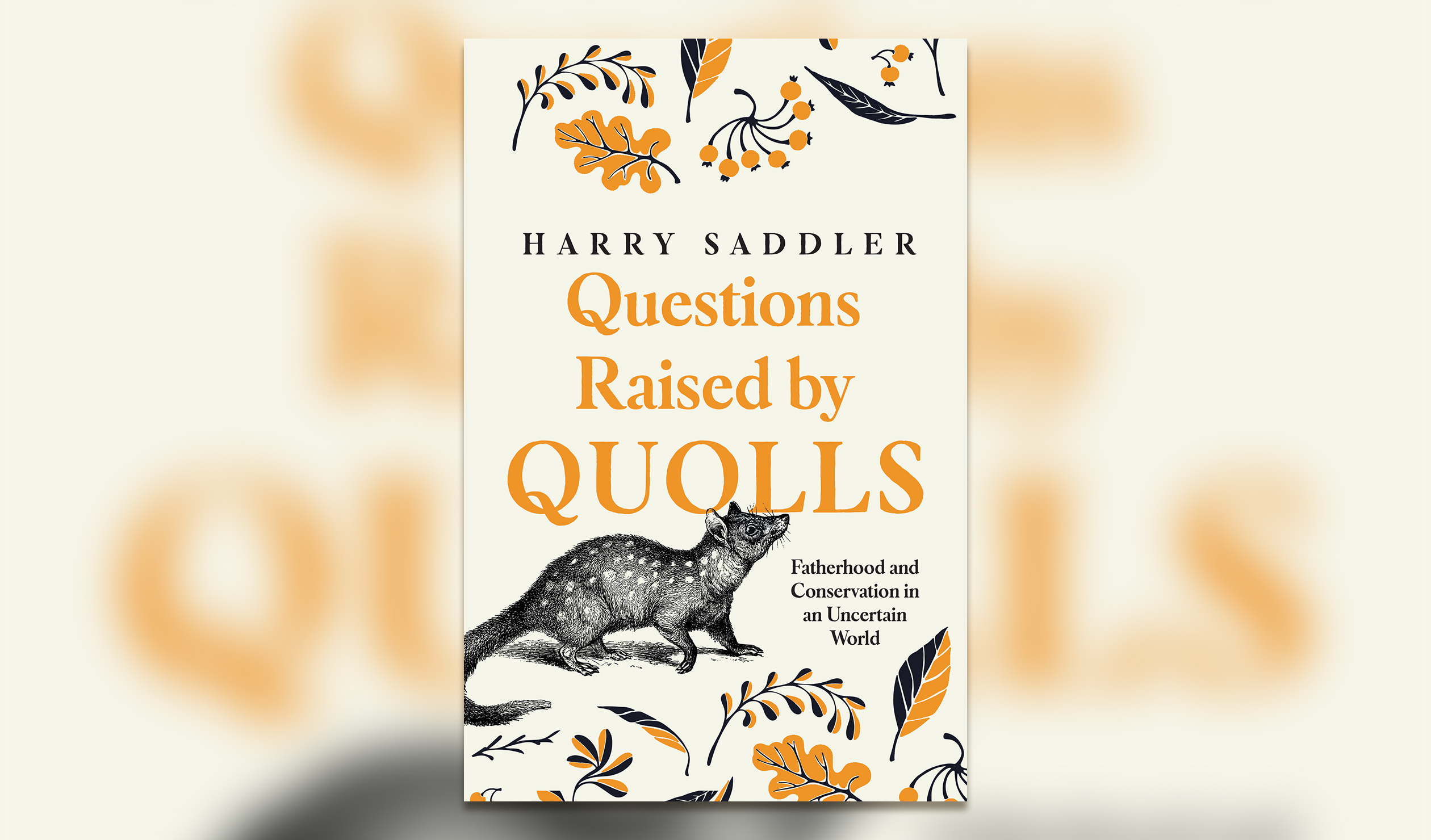
Harry Saddler’s most recent work of nature writing – Questions Raised by Quolls – could perhaps be better served by corrupting an often-used Raymond Carver book title to proffer: What We Talk About When We Talk About Quolls. Saddler’s narrative non-fiction does indeed ask a lot of questions, but it does so through gentle meandering and conversations that span generations, scientific fields, continents and genocides – both human and environmental.
Saddler draws on his own family’s story as well as the plight of the mammalian quoll (colloquially referred to as a native cat), which he has coveted since spotting one while camping with his father as a child. The author explores the destruction of our natural environment – the cause of which, it is remarked, always returns to “capitalism and colonialism” – and the impact this has on his desire to have children of his own.
It is difficult to talk about the state of the continent without talking about the local effects of the ever-growing climate emergency, such as the Black Summer bushfires. It’s unclear whether the fires crossed over with the researching and writing of this book, or whether they are coincidentally proof to Saddler’s central thesis – that the impacts of the climate crisis, including increasing rates of animal extinction, creates a difficult future to reconcile passing on to forthcoming generations.
You might like

The intersection between the rising popularity of fascism and environmentalism, which Saddler proffers combine to form a “barely concealed xenophobia and a fortress mentality”, overlaps into conversations here also. A “good and equitable environmental movement”, Saddler argues, must work hard to balance “a greener world” with fighting for the rights of “the most vulnerable and most disadvantaged in our society”. The impact of ecofascism is particularly sobering, and he poses questions of the environmental movement that deserve to be explored.
Ultimately, Questions Raised by Quolls does not successfully resolve the question inherit in its sub-title, “Fatherhood and Conservation in an Uncertain World”. Perhaps because in a world changing this rapidly, it is difficult to make informed decisions. Perhaps because a question this human is hard to rationalise, rather than emote. Perhaps because Saddler speaks of his own family and their connection – cemented through time spent outdoors, camping, hiking and bird watching – so beautifully that it’s hard not to want more of this, and less research (impressive though it is) on extinction.
Harry Saddler is one of Australia’s foremost nature writers, and his work here is essential in capturing this place and time. A lot of questions remain – now it is over to the reader to seek answers.
Questions Raised by Quolls, by Harry Saddler, is published by Affirm Press. Saddler’s previous book, The Eastern Curlew, was shortlisted for the Queensland Literary Awards in 2019.
Want to see more stories from InDaily SA in your Google search results?
- Click here to set InDaily SA as a preferred source.
- Tick the box next to "InDaily SA". That's it.
Free to share
This article may be shared online or in print under a Creative Commons licence