WOMADelaide review: Archie Roach, Lior and Sarah Blasko
It wasn’t WOMADelaide as it has come to be loved, but a heartbreaking farewell from one of Australia’s most important songwriters, and the power and grace of Lior’s Compassion song cycle, made Friday’s opening concert a landmark.
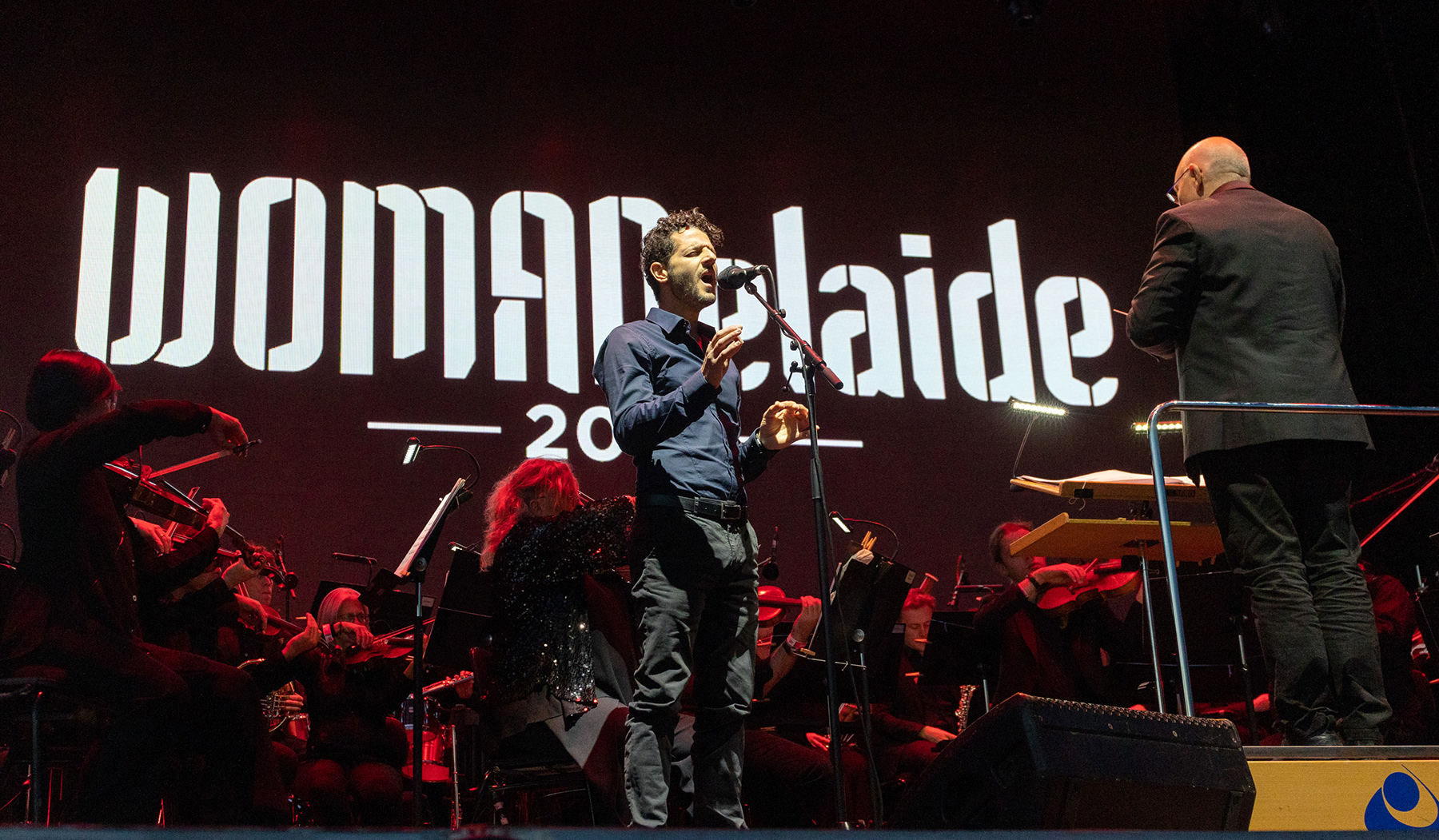
WOMADelaide’s usually expansive and relaxed festival wasn’t possible this year, with a series of more formal replacement concerts beginning last night in the new venue of King Rodney Park in the east parklands.
A suitably dispersed crowd were seated on plastic chairs on a manicured private school sports oval, before a single stage. The distinctive WOMADelaide flags rippled in the breeze and bats took their juttery flight at sunset, but that was about all that was similar in the venue.
Archie Roach, however, made the historic link between the old and the, temporary (I hope), pandemic-enforced new style of event.
Roach, the most important Australian contemporary songwriter of the past 30 years, was making his seventh and, he says, final appearance at WOMADelaide. The 65-year-old has had numerous health challenges and performed seated, while connected to oxygen.
He wasn’t fazed and kindly told the audience not to worry too much. He wanted to present his songs, mostly from his important, 30-year-old, debut album Charcoal Lane. He wanted to celebrate his connection with Adelaide, the place where he met his great love, the late Ruby Hunter, at a Salvation Army drop-in centre, and where he has found a regular musical home at WOMADelaide.
Roach’s distinctive voice has new layers of patina – it’s hard to imagine performing while also needing oxygen – moving at times into growling Tom Waits/late-era Leonard Cohen.
You might like

Accompanied by bass, guitar and violin, he played the title track, then Hunter’s piercing sole contribution to the album, “Down City Streets”, with Emma Donovan adding her soulful voice to the mix.
In a song that might be new to audiences, the country-edged “The Old Days”, with Leah Flanagan joining on vocals, Roach seemed to travel back with the lyrics – his voice catching the timbre of his younger self. This was followed by “Sister Brother”, “Free” (his anthem against racial profiling), and, for one final, heart-rending time, “Took the Children Away” – the cry-from-the-heart song that has become one of healing for so many people.
Roach sang it from his chair with the words emphasised with gestures and a raised head – as if he was saying – “do not forget this”.

His final song, also from Charcoal Lane, was almost unbearably poignant – the powerful storytelling song, “Summer of My Life”, about the old woman who he met in a hospital where her husband had passed away. Like all of Roach’s songs, the simplest language and images conjured a whole world – painful and beautiful and, on this night, heart-piercing.
I’m in the summer of my life
I’ve seen the good times, I’ve seen the strife
I’ve just been under the surgeon’s knife
But please don’t cry, my darling wife
‘Cause you and I, we’ve had some fun
And our love has touched everyone
And in the light of the moon and sun
You and I have been as one
Subscribe for updates
And, after a standing ovation, he was gone.
The Australian, Israeli-born singer-songwriter Lior was next – and he was celebrating his first live performance after lockdown.
He was joined on-stage by the Adelaide Symphony Orchestra to perform his Hebrew-Arabic song-cycle Compassion.
The ASO was conducted by Lior’s collaborator on the work, acclaimed composer Nigel Westlake.
Lior performed Compassion at the 2018 Adelaide Festival in the Town Hall with a stripped-down chamber orchestra accompaniment, but this version – outdoors and with the full power of the ASO – was a revelation.
The seven-part cycle sounds both contemporary and ancient, with Lior’s beautiful tenor voice – like the music combining pop inflections and older traditions – leading us from meditative chant-like sections to rhythmic, urgent calls, and ending with a haunting version of the prayer sung on the Jewish Day of Atonement.
Lior’s voice has a distinctive tenderness. As my concert-going companion noted, he managed to journey from pain and sorrow at the beginning to joy and hope at the end, in a subtle triumph of musical intelligence.
He finished with time to perform three of his most popular songs – “Bedouin Song”, “This Old Love” and “Safety of Distance”. It was a treat to hear them with full orchestral backing and, as Lior said, the first, with its middle eastern mode, was made to be performed under the stars.
The distinctive voice and song-writing vision of Sarah Blasko was the audience’s final serving for the night – and her performance seemed like a slightly odd fit with what went before (frankly, they were difficult acts to follow).
With acoustic accompaniment from double bass, drums and grand piano, she performed what was dubbed as a 10-year anniversary reworking of her album “As Day Follows Night”.
Channelling a late-night cabaret, American songbook vibe seemed like a good plan, given the setting, but it took away, for this reviewer, some of the delicacy of the original recordings, and also exposed the simplicity of the compositions, so often built on two-chord shifts.
One final note – it was curious and annoying to see some of Adelaide’s “A-list” treating the more formal setting as an excuse to network, chat and laugh, during Roach and Lior’s powerful performances. In the usual WOMADelaide setting, that wouldn’t have happened – why would you behave like that last night?
WOMADelaide’s concert series continues until Monday night.
Want to see more stories from InDaily SA in your Google search results?
- Click here to set InDaily SA as a preferred source.
- Tick the box next to "InDaily SA". That's it.
Free to share
This article may be shared online or in print under a Creative Commons licence