Diary of a Publisher: Little quirks and grand passions
Having once aspired to a career as a singer, Adelaide writer Poppy Nwosu is now the author of two young-adult novels and will speak on the subject of Little Quirks and Grand Passions at Writers’ Week. Michael Bollen recounts her storybook beginning.
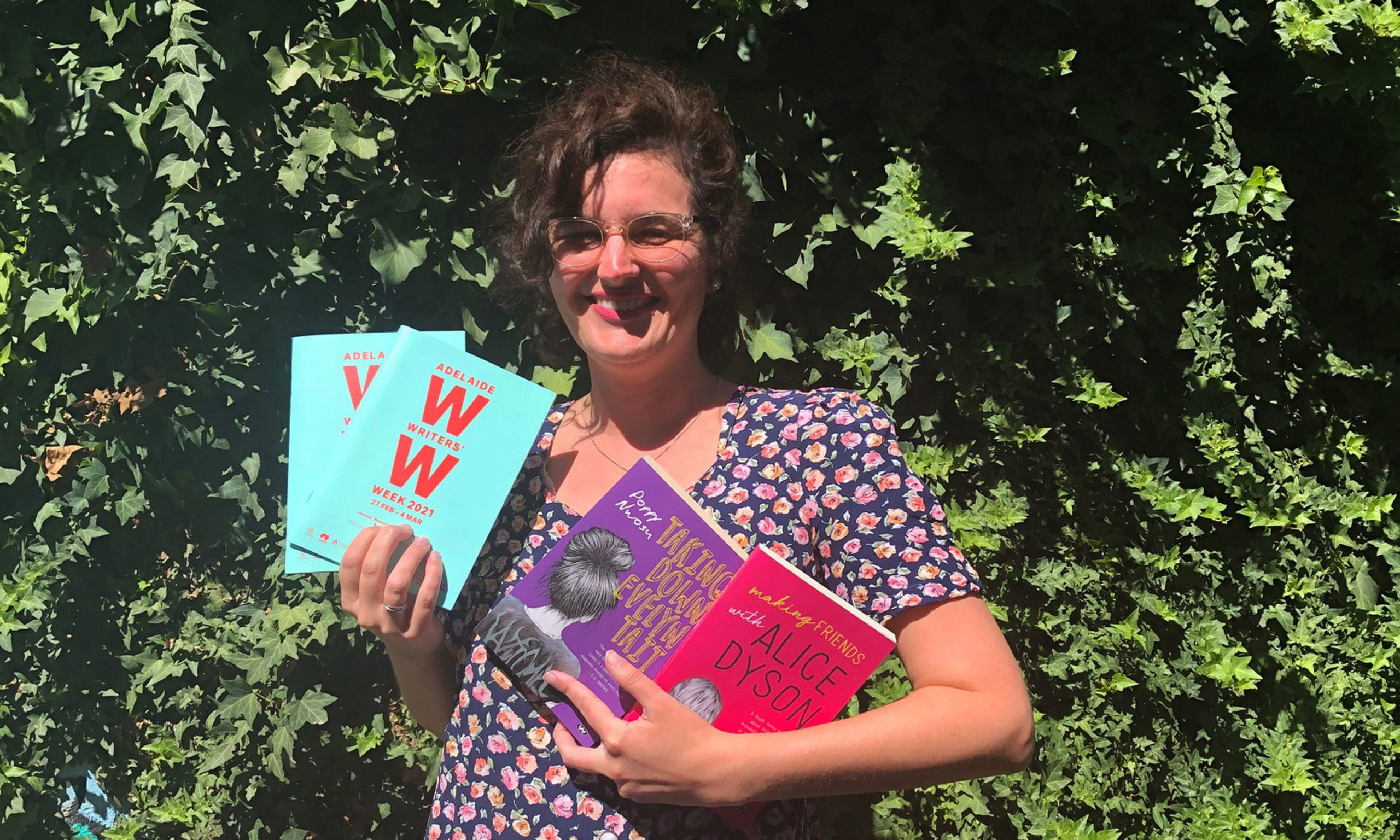
“I know this isn’t a great time, but I kept forgetting to book in this leave,” Poppy Nwosu emails me, requesting some days off in April for a writing retreat at Varuna in Katoomba. “It’s the last possible dates, and I think I’ve doubted I’ll be able to get interstate at all.”
Poppy works here at Wakefield Press three days per week in publicity and marketing. She is also a novelist with a growing readership and career.
No problem, I reply, but she’s still a tad anxious. “If I have to quarantine when I get back, Gus won’t be able to go into work either.” Poppy’s husband, Gus Nwosu, works in clinical trials. His isn’t labour you can do from home.
So the moment hangs, like moments in lives across our wide land.
An hour later, Poppy gets a phone call from Sydney that returns the smile to her face. A Melbourne author has needed to drop out of her Adelaide Writers’ Week meet-the-author session. Would Poppy take her place? Yes indeed.
Before she hangs up, the programmer congratulates Poppy on her second novel, Taking Down Evelyn Tait, being chosen as one as one of top 10 YA books of 2020 by Melbourne independent bookstore Readings, whose kids buyer Angela Crocombe is a huge fan of Poppy’s, and an invaluable supporter of our burgeoning young adult list.
You might like

Poppy and Gus live in Taperoo. Her rom-com novels, or at least the two we have published so far, are set around the Port area. It’s “the kind of place that creeps beneath your skin”, narrator Lottie reflects in Taking Down Evelyn Tait as, sticking her fingers out the window, she drives with her father across the “wide bridge, long and smooth, stretching over the sparkling river”, past a factory “all red bricks and open gaping windows, glass shattered like wolves’ teeth in deep dark mouths”.
On summer weekends Poppy and Gus love cycling the “dusty industrial streets, past scrubby dunes along the coast, beneath the empty warehouses of Port Adelaide, cutting behind the cement factory where the big ships are”.
“I think it is very beautiful in its own unique way,” she says.
Poppy grew up in a somewhat different setting. “Finch Hatton,” she says, “is a tiny village halfway along Pioneer Valley in central North Queensland, surrounded by cane fields. We had a deep river, perfect for swimming, just across the road, lush rainforest and waterfalls nearby at the base of the mountains. Our garden was full of overripe mangoes, paw-paws and passionfruit. I used to climb the tree in our front yard and watch the cane trains, the ‘locos’, chug by, counting the cane bins on their way to the sugar mills. Back then, farmers used to burn the cane before harvest, so you would see entire fields become bonfires at night. I spent much of my childhood bouncing on the trampoline in the backyard while catching ash as it floated down from the sky like black snow.”
Poppy’s mother, rebel scion of a landowning West Australian establishment family, and her father, an arrival from Ireland, sought nirvana in the rainforest, painting their house in rainbow colours, opening it sometimes as an art gallery. (Her father, Rory Brockman-Tanham, drew the clever illustrations that adorn her book covers.) They learned over time that politically, at least, northern Queensland was not quite the idyll it appeared to be.
Poppy studied music – jazz, in particular, singing and playing the flute – at the Conservatorium in Mackay. This, no doubt, helped her get a job when she travelled to Dublin. She met Irelander Gus when they were fellow workers at the famed HMV store in Grafton Street, Poppy in the jazz section, Gus in commercial music but yearning for a heavy-metal spot. Poppy scavenged knowledge from Gus in creating Lottie, a heavy-metal fan.
Subscribe for updates
They moved to Australia, and to Adelaide where Poppy’s parents had now “at random” chosen to live. Poppy came to realise she wouldn’t become a professional singer. “I figured out that to do anything creative, you really have to push and push.”
So, creative fire burning bright, she pushed and pushed herself into five o’clock mornings and weekends between jobs, commencing her career as a novelist. Indulging her joy of writing, scribbling perhaps five novels, reworking them, until – around a decade later – her draft of Making Friends with Alice Dyson was shortlisted for the unpublished manuscript award we sponsor with Arts SA.
I remember our (then) editor Margot Lloyd chasing Poppy down at Writers’ Week in 2018: “I love this manuscript, Poppy!” Tears were shed, on both sides.
Not long after we published Alice Dyson, the giant Walker Books (USA) snapped up international rights. A storybook beginning, as the cliche has it.
Back in conservative Finch Hatton, only-child Poppy was known as the “Wild Kid”. Perhaps some Finch Hattoners would be surprised that Poppy’s first published main character, Alice Dyson, is the kind who “knows exactly how she’ll be spending her final year of high school. With her head down, concentrating on her textbooks and homework”.
But things don’t go entirely to plan for Alice (do they ever in life?). “I’ve always loved coming-of-age stories,” Poppy says. “All those first-time emotions are so raw, real and messy, and are endlessly fun to write about.”
Here at Wakefield she is conscientious, professional, friendly, to a tee. There are depths beneath, of course, just as there are in her sparkling novels.
Charming enigmas, you might say. Come find out for yourself this Sunday, 11am, at Adelaide Writers’ Week. Meet Poppy at her YA Day session, Little Quirks and Grand Passions.
Michael Bollen is director at Adelaide-based independent publishing house Wakefield Press. He writes a regular column for InDaily.
The full Adelaide Writers’ Week program is online.
Want to see more stories from InDaily SA in your Google search results?
- Click here to set InDaily SA as a preferred source.
- Tick the box next to "InDaily SA". That's it.
Free to share
This article may be shared online or in print under a Creative Commons licence