Film review: A Beautiful Day in the Neighborhood
Tom Hanks channels a beloved children’s TV host in A Beautiful Day in the Neighborhood – a film that is much more than a traditional biopic.
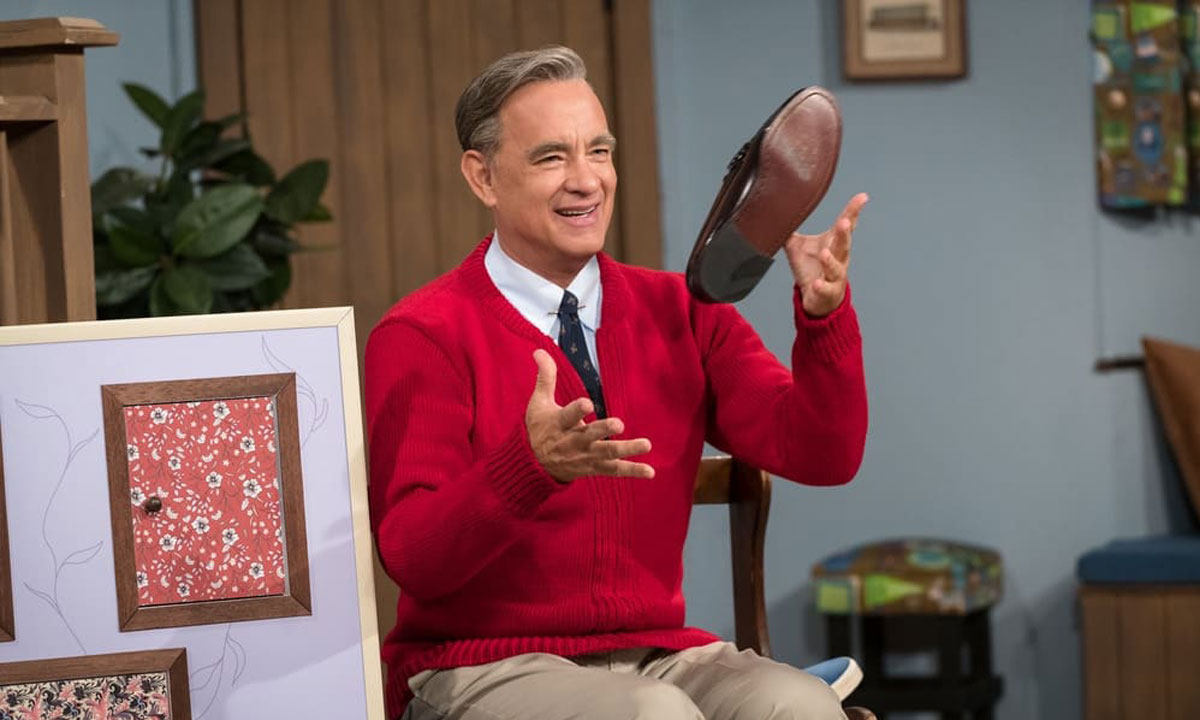
Many Australians won’t have heard of Fred Rogers or his legendary children’s television program Mister Rogers’ Neighborhood. Running from 1968 to 2001, it was a huge part the childhood of several generations of Americans, so you might assume a large part of the appeal of A Beautiful Day in the Neighborhood would be the nostalgia it evoked in American audiences. That couldn’t be more wrong.
It’s not until the end-credits that Australian viewers will understand how accurately Tom Hanks nails the folksily hypnotic speech patterns and disarming mannerisms of this almost indescribably benevolent man.
Yet Hanks does more than merely replicate Rogers’ physical being. He also manages to show how he uses that quiet, halting way of being in the world to slow everything down, creating an atmosphere where his viewers or companions feel safe, cared for and deeply understood. But the strange thing about this biopic is that it’s not really about the life of Mister Rogers. It’s more about the compassionate impact his spirit has on those around him.


Directed by Marielle Heller (Can You Ever Forgive Me?), from a script by Noah Harpster and Micah Fitzerman-Blue, the film is based on a 1998 Esquire cover story for which journalist Tom Junod was assigned to do a profile of Fred Rogers, only to find that spending time with Mister Rogers, even as an adult, had a powerful impact on his life.
In the movie, the writer is Lloyd Vogel (Matthew Rhys), an investigative journalist known for his lacerating exposés. From the outside he has it all: an award-winning career, a gorgeous and successful wife, Andrea (Susan Kelechi Watson), and an infant son. But Lloyd is a deeply angry and unhappy man, as is revealed at his sister’s third wedding where he runs into his father, Jerry (Chris Cooper), for the first time in years and ends up in a brawl.
Back at Esquire, looking worse for wear, Lloyd is assigned to do a short profile piece on Fred Rogers for the magazine’s “Hero” issue. He couldn’t be less interested, but travels to Pittsburgh to meet the legendary host on the Mister Rogers’ Neighborhood soundstage.
Lloyd begins the interview, asking all sorts of artfully probing questions, only to find that Rogers is more interested in interviewing him. Beneath the children’s-host façade, Fred’s patient curiosity makes him a potent mix of psychologist and gentle life-coach, coaxing out Lloyd’s pain and opening his eyes to the love and support that have been there all along.
Subscribe for updates
Director Heller playfully shoots the scenes from the famous television program as if we are watching them on an old videotape. And, delightfully, she also shoots all the establishment and landscape scenes using the same miniature architecture used in the famous program. The overall effect is to give the film the enchanting feel of a modern fable.
This deeply moving film is far more than a portrait of a rare public figure who is the same profoundly kind and good person on-screen and off. It’s more than the story of an angry writer coming to terms with the father who abandoned him. It’s about a spirit of compassion that has become rare in our world and how powerful the practice of kindness can be.
But beware – you will singing the theme song to Mister Rogers’ Neighborhood for days.
Want to see more stories from InDaily SA in your Google search results?
- Click here to set InDaily SA as a preferred source.
- Tick the box next to "InDaily SA". That's it.
Free to share
This article may be shared online or in print under a Creative Commons licence