Shoemaker proves patience is key to the perfect fit
In an industry dominated by mass manufacturing and fast fashion, Adelaide shoemaker Beccy Bromilow is quietly filling a niche demand for made-to-order shoes patiently crafted by hand.
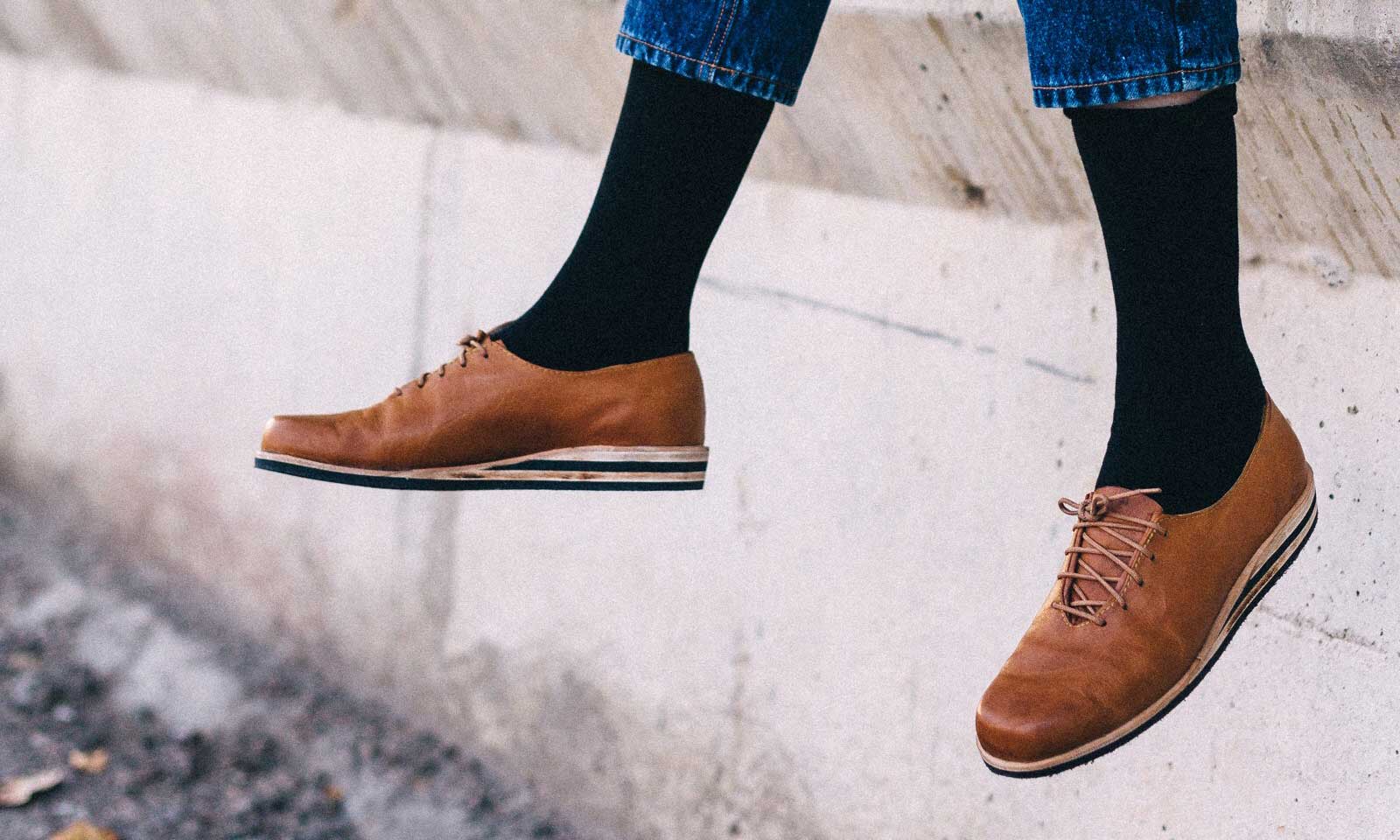
“Sometimes I just want to say I’m a banker,” says Bromilow, who for the past three-and-a-half years has made and sold handmade shoes under her BB Shoemaker label.
“Sometimes I’m feeling great and I want to shout about my trade but you do get lots of questions because people just don’t expect me to be a shoemaker.”
It was an inadvertent career outcome for the former milliner, who enrolled in a shoemaking course at TAFE while at a crossroads in her life.
After studying millinery for three years, Bromilow says she found it difficult to find sufficient work, so she enrolled in shoemaking “for a bit of fun”.
“I’ve never been a massive shoe person but I’ve always liked shoes,” she says.
“It is more the process of it that appeals to me because there’s lots of different processes which are quite interesting, and you don’t get bored.”
A few months before completing her degree, Bromilow decided to move into a co-working space with her friends – The Mill on Angas Street – where she set up a sewing machine and a couple of tools and launched BB Shoemaker.
Bromilow started with custom designs, before switching focus to seasonal made-to-order styles.
You might like

The change of focus meant she needed a bigger space with shop frontage, which she found when she helped start up another co-working space and shop, Ensemble on Gilles Street.
“When you’re younger you play shop and you never think you’ll actually end up with a shop, so it’s quite crazy to think about how fast things moved.”
Bromilow admits she doesn’t fit the archetypal mould of a traditional shoemaker or cobbler, but says the trade has shifted.
“Some people have said to me, ‘I thought most shoemakers are men’, but actually in Adelaide the only shoemakers I know are female.
“I guess people still have that perception of the old man working in Europe, but it’s definitely changed.”
Her kangaroo leather shoes are made completely by hand at the Ensemble studio, where she cuts, dries and stitches the shoes using time-honoured techniques.
Bromilow takes an ethical approach to sourcing material. Most of the shoe leather comes from the hides from South Australian culled kangaroos and is tanned using the vegetable-tanning process.
“Veg tan is the traditional way of doing it using tannins from bark or nuts or roots, depending on what the recipe is.
“The modern version is chrome tanning – using chromium salts which are highly toxic but faster and cheaper to do which means it’s harsher on the environment.
Subscribe for updates
“It’s hard to trace leather that you buy offshore so I try where I can to buy local.”

The end result is “a subtle kind of look” with muted colours and classic shapes.
“I think there’s two reasons people buy my shoes.
“They like the idea of knowing who made their shoes…we’re so out of touch with a lot of these things now because it just happens and suddenly the shoes are in the shop and it can feel like they just come out of a machine.
“There’s also a slow process to it – people come to me, they pick the style, they pick the colour they want and then they get measured and in six weeks they have a shoe made up for themselves. It’s something quite personal.”
A successful shoemaking business has led Bromilow to explore new product options – including handcrafted dog collars, bags and belts.
Her dog collars are made in collaboration with South Australian artist Olivia Kathigitis, who designs the palm-shaped key chains that dangle from the collar.
“I’ve always got a list of other things to make – the dog collars were on the list for quite a while but it wasn’t until a friend who had a dog asked if I could make her one that I eventually went ahead and did it.
“From there it just went off because people want to spend money on their pets or get their pets something special.”

But Bromilow says success creates a conundrum: whether to retain autonomy over production or explore larger-scale manufacturing.
“It’s a little bit of a control thing – wanting to have control over what you’re doing.
“You get to a point and you think there’s only so much I can do myself but it’s a tricky one knowing what future direction to take.
“I’ll just see where things take me and the most important thing is I’m happy where I am now.”
This story is part of a new InDaily series profiling independent South Australian makers, including designers, artists and craftspeople.
Want to see more stories from InDaily SA in your Google search results?
- Click here to set InDaily SA as a preferred source.
- Tick the box next to "InDaily SA". That's it.
Free to share
This article may be shared online or in print under a Creative Commons licence