Film review: England Is Mine
Director Mark Gill attempts to capture the bleak ’70s Manchester life of a pre-Smiths Morrissey in this frustrating muso-pic showing as part of the British Film Festival.
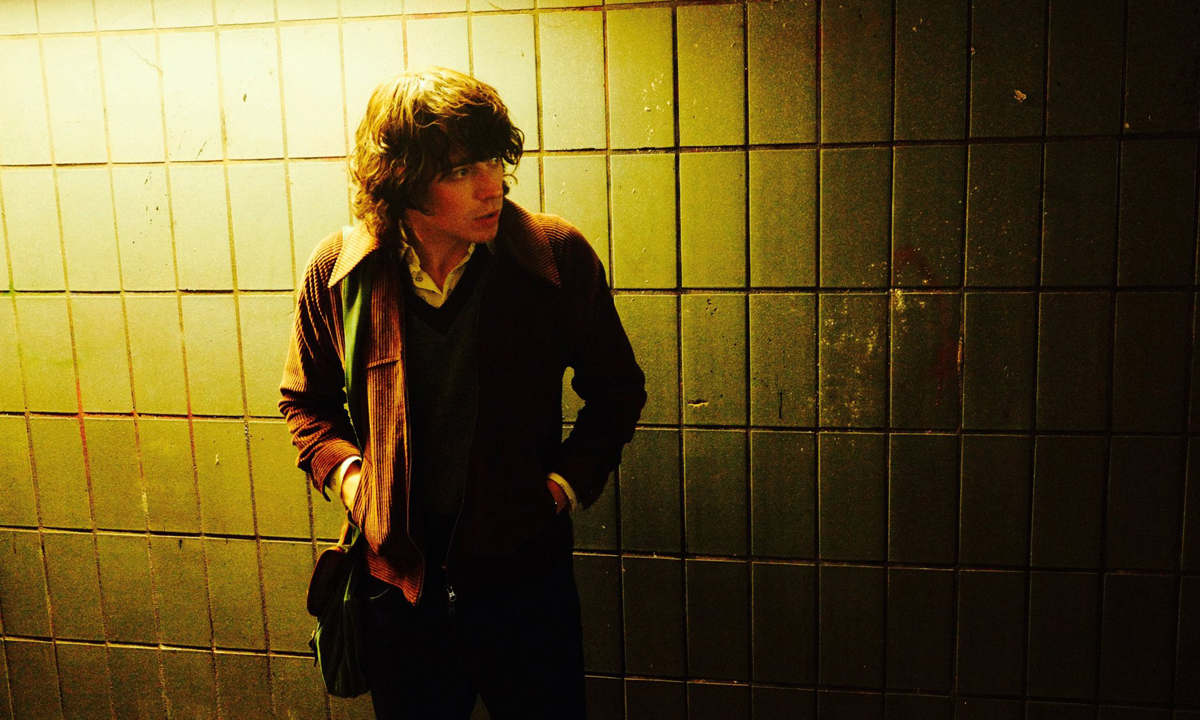
The title for the film was going to be “Steven”, a name Morrissey hates, no doubt because it fails to reflect his iconic status as a misunderstood genius.
Its final title is a reference to The Smiths’ “Still Ill”, in which Morrissey sings: “England is mine, and it owes me a living”, and yes, this film (which calls itself “a meditation on becoming Morrissey”) portrays those aimless years when he sulked his way through dull drone-work; the years before The Smiths, his solo career and seclusion in an opulent Hollywood mansion.
Love or loathe him, Steven Patrick Morrissey is undeniably one of Britain’s great vocalists and lyricists, voted second-most iconic living Brit (pipped to the post by Sir David Attenborough) and ninety-second in Rolling Stone’s top 100 singers of all time.
One suspects he was miffed not to be first, because the one thing everyone knows about the enigmatic Morrissey is the unshakeable confidence in his own genius that led to his insistence that his under-edited “Autobiography” be published as a Penguin Classic. What this film attempts to capture is the complexity accompanying the confidence: his shyness, depression, humour, self-deprecation, ambiguous sexuality and inability — and refusal — to fit in.

Morrissey (Jack Lowden) lives at home with his sister and mother, his disapproving father having walked out. Hiding under his floppy, not-yet-Morrissey-quiffed fringe, he mopes about, too sensitive and intellectual for dull Manchester, wary of homophobic bashings, scribbling in his notebook and penning letters with scathing critiques of local bands to music magazine NME.
He is isolated, save for his platonic relationship with Anji (Katherine Pearce) until even she grows tired of his narcissistic brooding and deserts him. Later, he encounters her again, mute and presumably dying, in an oddly-placed scene in the hospital where he works briefly as a porter.
Another female friend, Linder (Jessica Brown Findlay), affords glimpses of a rock ‘n’ roll world, and his devastation when she leaves for London foreshadows the long depression caused by the breakup of his first band, The Nosebleeds.
On the eve of Linder’s departure, she and Morrissey discuss Keats in a cemetery, a scene that rewards Smiths fans with its references to the song “Cemetery Gates”; there’s also a fairground scene inspired by “Rusholme Ruffians”, and that previously mentioned hospital scene is probably a somewhat contrived reference to “Girlfriend in a Coma”. It’s just as well, really, because this unauthorised film suffers from its lack of access to The Smiths’ back catalogues that might have given it more spark.
Subscribe for updates
There’s a tick-list of Things We Already Know About Morrissey: the George Best and Oscar Wilde pictures on his wall, his vegetarianism, his love of the New York Dolls. This may satisfy for some die-hard fans, but one suspects it won’t go far enough.
The beautiful cinematography evokes the atmosphere of Depression-era Manchester, perhaps enough to make the film watchable, but the only real moments of excitement come with the thrilling tease of Morrissey’s luscious tenor in a Nosebleeds gig scene, and at the very end, when he knocks on Johnny Marr’s door.
Will Self verbalised Morrissey’s unknowability: “I am what I am, but you’re not allowed to know what I am”. Gill makes a brave attempt to allow us to “know” Steven — the real Morrissey — but when the credits roll, the question has to be asked: what does this film add to the material that’s already out there?
England is Mine is showing at Palace Nova Eastend on November 2 and 9 as part of the British Film Festival, which runs until November 15.
Want to see more stories from InDaily SA in your Google search results?
- Click here to set InDaily SA as a preferred source.
- Tick the box next to "InDaily SA". That's it.
Free to share
This article may be shared online or in print under a Creative Commons licence