The audience takes centre stage in this show about work
Why do we work? That’s the key question in work.txt, an intriguing and immersive Adelaide Fringe show in which the audience becomes the cast.
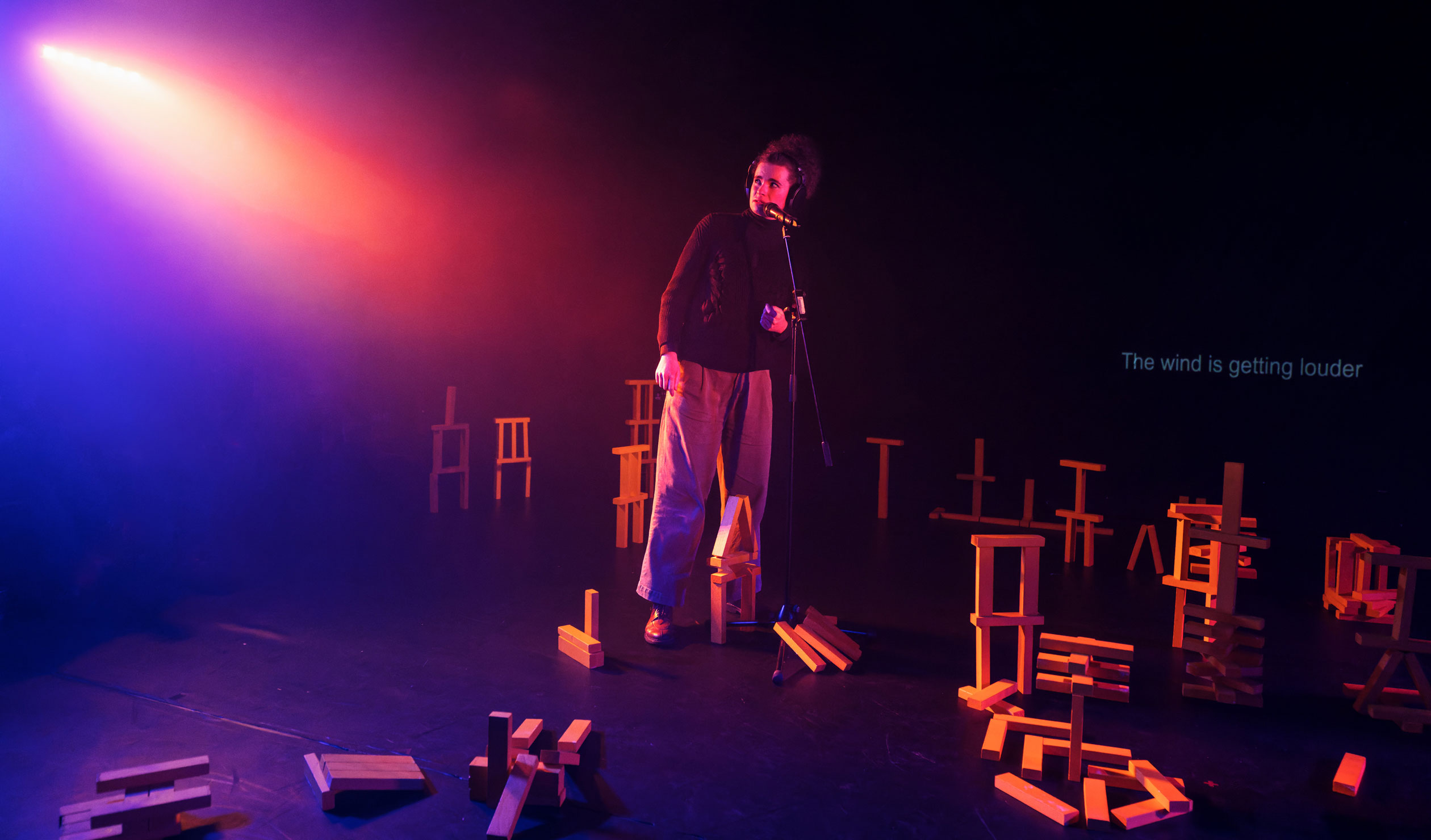
If you’re confused about how to say the title of work.txt, you’re not alone.
“Work-dot-text,” says UK writer and producer Nathan Ellis, after I assumed it was “work t-x-t”.
“It’s happened so many times,” he adds, laughing. “In retrospect, it’s my fault for calling it something that literally you can’t say.”
What is clear, however, is that this show – which will have its Australian premiere at the 2023 Adelaide Fringe as part of the Electric Dreams program – is about work and its social function.
“I’d read a book by a sociologist called David Graeber, which is called Bullshit Jobs,” Ellis explains.
“He read this statistic, that more than half of people believe that if they stopped doing their job tomorrow, nothing would happen – the world would just continue, and no one would really notice. He obviously found that disturbing, the way that society has constructed a whole bunch of jobs.
“This was the starting point for the show: Why do we work? If we extract the money part of it, what’s the purpose of it? What does it give us?”
Ellis started making work.txt in London four years ago, when discussions around the gig economy and financial instability were “very much in the air”.
“It felt like it was a thing that was being talked about a lot in culture, and people were interested in it as an issue,” he says, noting that the themes were prominent even before the COVID-19 pandemic.
You might like


“Pandemic? What’s that?” jokes Ellis. “Well, it was a bit of a weird one. The week after we did our first set of previews of testing out how the show was going to work, people stopped working [because of the pandemic].
“Lots of people, obviously, were still doing their job, but lots of people weren’t working any more! It provided an example of the things that work does give us, which is often a sense of purpose, a sense of collective belonging, and a thing to get up for in the morning.”
Since work.txt’s conception, the pandemic has brought concepts such as “quiet quitting”, “the great resignation”, “WFH” (work from home), “hustle culture” and “burnout” into public discourse all around the world. With them came discussions about the value of work.
The show, which had its world premiere at London’s Soho Theatre, doesn’t follow a traditional script, but its narrative is guided by these ideas.
“It’s a story about a person in a major city, who has a job working in a social media marketing company,” says Ellis.
“They decide to stop working one day. They just lie down in the entrance way – in the lobby in their work – and this idea of stopping, and the repercussions of that action, how that ripples out around the city, that’s what it’s exploring.”

The show also explores the desire or tendency that we have to turn the things we enjoy into work.
“Like the logic of work and the way that we apply that to, say, baking bread,” says Ellis, about a trend that emerged during the pandemic. “I don’t know whether that was a big thing in Australia, but in the UK, people would post about getting better and better at baking bread.
“What they’ve really done is they taken something they enjoyed, and they just apply the way that they approach work to it, which is, ‘Let’s get really good at this’, and ‘Let’s make it into a business’.”
During its time at the Adelaide Fringe, work.txt will be constantly evolving.
“The show gets changed, basically, every day,” says Ellis. “It’s supposed to be really-up-to-the-minute and relevant to the particular audience, because there’s no actors in it.”
Subscribe for updates
This highlights a unique element of work.txt: it’s a show with no actors, to be performed only by the audience.
“The important thing to emphasise is there’s nobody there who’s going to tell you, ‘You have to perform the show’,” says Ellis. “All of the audience interaction is entirely voluntary.”
The audience will be led by projected text with instructions on what to do.
“There’s also a printer on stage that prints out scripts that are different every day, and the audience go up and volunteer to perform them for the rest of the audience.”
At one point in work.txt, all the audience members get to act like big kids, coming up on the stage to play with Jenga-like blocks and construct towers. Ellis says that through “a bit of imaginative theatre magic”, these towers then become the set for the show.
Ellis understands the hesitancy some audience members feel towards participating, so has tried to create “a very fun and warm environment”.
“I’m not really into immersive theatre, so it felt like a challenge to try and use these techniques to explore the themes and find a way to do it that doesn’t ever lean on embarrassing people.”
"it’s fun watching people figure out how to do something new"
Reception to this version of participatory theatre has been overwhelmingly positive.
“I was amazed. I didn’t actually know whether it was going work. I really vividly remember the first projected line that they [the audience] were supposed to say out loud together coming up – people started screaming it out.
“We found that as soon as audiences realise how the techniques are going to work, it’s quite hard to get them to calm down. We’ve done, maybe, like 70 or 80 shows around the world, and we’ve never had it not happen. Never had anyone not want to go up and volunteer.”
Ellis attributes this participation to the universal themes of the piece.
“Obviously, the job that is described in the show is quite specific to a particular kind of culture. But all cultures are currently reckoning with the questions like, ‘What place does work have within a society?’, ‘What do we want?’ or ‘What kind of world do we want to have?’.”
While work.txt tackles confronting, existential questions, Ellis insists there’s a lightness to the production and audiences should expect to enjoy themselves.
“I’ve seen the show more times than I would wish to, and I still do find it really fun because it’s fun watching people figure out how to do something new.
“There are some pretty good jokes, too!”
Work.txt is part of the Electric Dreams program of Fringe events. This series, presented by Crossover Labs – a team of curators and producers who create digital, cutting-edge programs – showcases the art of immersive storytelling, and how technology can enhance such experiences. It also includes an Electric Dreams conference at the University of Adelaide on February 20.
Electric Dreams: work.txt is playing at The Little Theatre from February 23 until March 5 as part of Adelaide Fringe, which opens on February 17.
This story is part of a series of articles being produced with the support of Adelaide Fringe. Read more Fringe stories here.
Want to see more stories from InDaily SA in your Google search results?
- Click here to set InDaily SA as a preferred source.
- Tick the box next to "InDaily SA". That's it.
Free to share
This article may be shared online or in print under a Creative Commons licence